
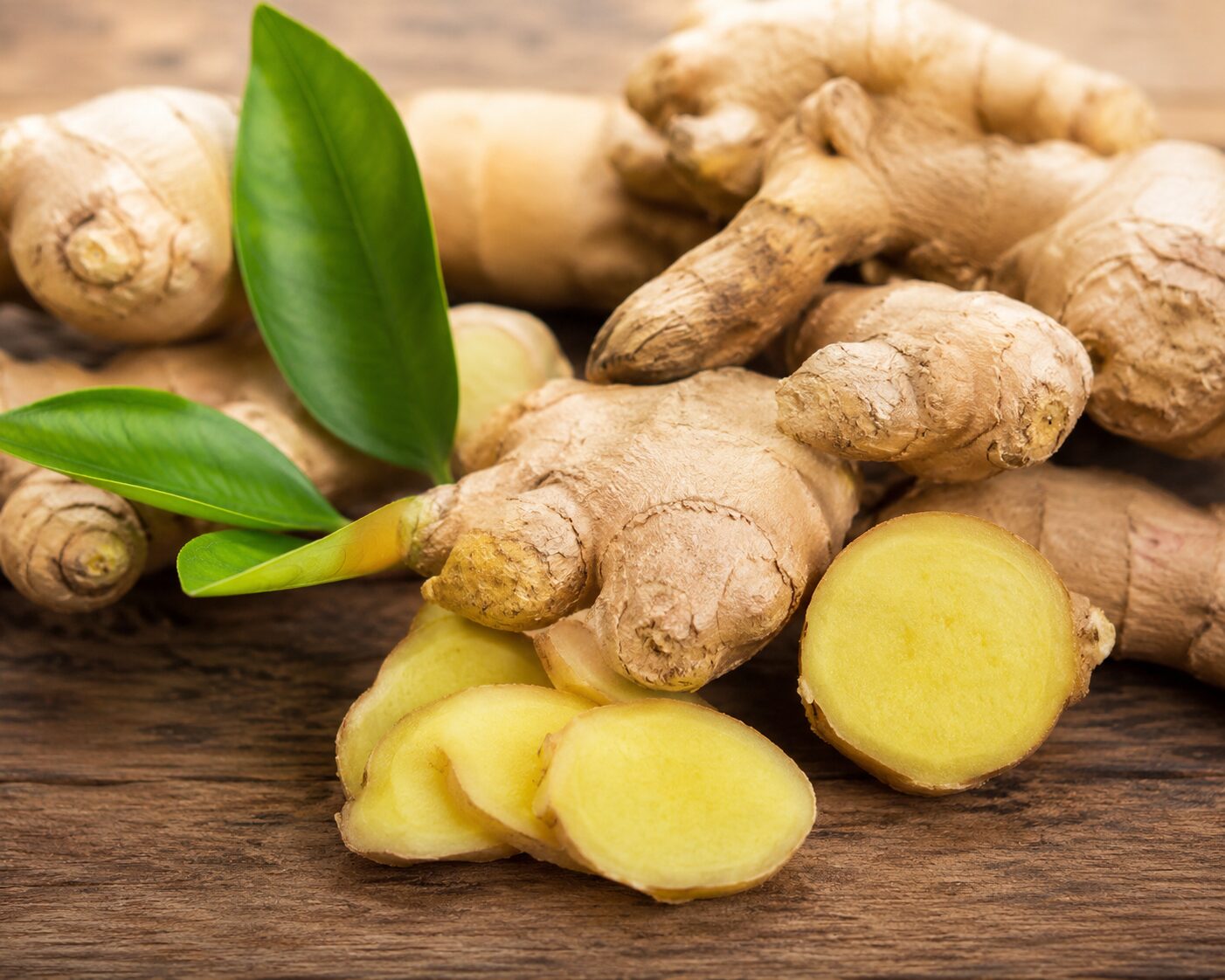
Ginger (Introduction, Benefits, and Usages)
Ginger benefits have been documented for over 5,000 years — and modern science keeps validating what traditional healers already knew. Zingiber officinale is one of the most clinically researched medicinal plants on earth, with strong evidence for nausea relief, pain reduction, anti-inflammatory action, blood sugar management, and immune support. Ayurveda calls it Vishwabeshaj — the “universal medicine.” That title holds up. See Wikipedia: Ginger. For related warming herbs, explore Turmeric and Black Pepper.
What Is Ginger? A Complete Introduction
Origin and History of Ginger
Ginger originated in Southeast Asia and has been cultivated for at least 5,000 years. Ancient traders carried it along the Silk Road to the Arab world and eventually to Europe, where it became one of the most prized imported spices. The Charaka Samhita names dried ginger (Sunthi) as Vishwabeshaj — medicine for the world. Greek physicians, Chinese doctors, and Ayurvedic herbalists all used it for the same core conditions: nausea, digestive disorders, and pain.
India is now the world’s largest ginger producer. The plant (Zingiber officinale) grows as a perennial herb to about 1 metre tall, with the familiar gnarled rhizome harvested as both food and medicine.
Key Compounds and Nutritional Profile
Fresh ginger’s primary bioactive compounds are gingerols — particularly 6-gingerol. When ginger is dried, gingerols convert to shogaols, which are more potent and better absorbed. This is why Ayurveda considers dried ginger (Sunthi) more medicinally powerful than fresh. Additional active compounds include paradol, zingerone, and zingiberene (the dominant sesquiterpene in the essential oil). See Wikipedia: Gingerol.
Top Health Benefits of Ginger
Ginger Benefits for Immunity and Overall Health
Ginger’s anti-nausea properties are its most clinically validated benefit. Multiple randomised trials confirm ginger reduces nausea severity in pregnancy (morning sickness), chemotherapy patients, and post-surgical recovery — with a safety profile that makes it appropriate even in the first trimester. For immune support, ginger’s warming diaphoretic action promotes sweating during fevers and its antimicrobial compounds fight respiratory infections.
Can ginger really compete with pharmaceutical anti-nausea drugs? For mild to moderate nausea, the evidence says yes. A systematic review of 12 RCTs found ginger significantly reduces pregnancy nausea — and unlike antiemetics, it’s safe for the developing baby.
Ginger for Skin, Hair, and Beauty
6-shogaol and 6-gingerol protect skin cells from UV damage and reduce the inflammatory cascades behind acne and redness. Ginger oil applied to the scalp improves circulation to hair follicles and has antimicrobial activity against the fungi associated with dandruff. The selenium content in ginger also supports hair structure through selenoprotein activity. It’s not a primary beauty herb, but it earns its place in DIY skin and hair remedies.
Medicinal Properties of Ginger
How Ginger Works as a Natural Remedy
Ginger’s anti-inflammatory action works through dual COX/LOX inhibition — it blocks both cyclooxygenase and lipoxygenase pathways simultaneously. NSAIDs only target COX. This broader anti-inflammatory profile explains why ginger outperforms ibuprofen for certain pain conditions (particularly osteoarthritis and menstrual cramps) without the gastric side effects. Clinical trials have found ginger extract comparable to ibuprofen for knee osteoarthritis pain over 6 weeks.
The anti-emetic mechanism involves 5-HT3 receptor antagonism in the gut — the same receptor targeted by ondansetron — plus accelerated gastric emptying that reduces gastric stasis triggering nausea.
Ginger in Ayurveda and Traditional Medicine
In Ayurveda, fresh ginger (Adrak) is pungent, heating, and reduces Vata and Kapha. Dried ginger (Sunthi) is considered more potent — particularly for deep Kapha and respiratory conditions. The classical Trikatu formulation combines ginger with Pippali and black pepper for digestive and metabolic support. Ginger is classed as Deepana (kindles digestive fire) and Pachana (aids digestion) — functions that align precisely with its demonstrated effects on gastric motility and enzyme secretion.
How to Use Ginger — Practical Usages
Ginger in Food, Tea, and Cooking
Fresh ginger tea is the simplest and most effective daily preparation: slice 1–2 cm of fresh root, simmer in 2 cups of water for 10 minutes, strain, add honey and lemon. Drink 2–3 cups daily for digestive support, nausea, or respiratory infections. Add ginger liberally to stir-fries, curries, marinades, and smoothies. Dried ginger powder (Sunthi) — ¼ teaspoon in warm water or milk — is more potent and better suited for chronic conditions.
Ginger as a Supplement or Topical Application
Standardised ginger extract capsules (500–1000 mg, standardised to gingerol/shogaol content) are the form used in osteoarthritis and anti-inflammatory trials. For topical pain relief, ginger essential oil (2–3% in a carrier oil) applied to arthritic joints provides warming analgesic effect. A ginger compress — cloth soaked in strong hot ginger tea applied to painful areas — is a classical Ayurvedic therapy for musculoskeletal pain that combines thermal and transdermal gingerol absorption.
Side Effects and Precautions of Ginger
- Blood thinning: ginger has mild antiplatelet effects — avoid high-dose supplements 2 weeks before surgery; caution with warfarin or antiplatelet drugs
- GERD: can worsen acid reflux in some people — test with small amounts if you have reflux
- Blood sugar medication: ginger mildly lowers blood sugar — monitor if combining with antidiabetic drugs
- Pregnancy: 1g daily is considered safe for nausea; higher doses and third-trimester use should be discussed with your doctor
Frequently Asked Questions About Ginger
What are the main ginger benefits for health?
Ginger benefits include nausea relief (pregnancy, chemotherapy, post-surgical), pain reduction for osteoarthritis and menstrual cramps comparable to ibuprofen, improved gastric motility and digestive function, broad anti-inflammatory action via COX/LOX inhibition, blood sugar reduction, cholesterol lowering, and immune support through antimicrobial and diaphoretic activity.
Is fresh ginger or dried ginger better?
Both are valuable for different purposes. Fresh ginger is better for immediate digestive support, nausea, and cooking. Dried ginger (Sunthi) is more potent for anti-inflammatory use because shogaols — formed when gingerols dehydrate during drying — are more bioavailable than gingerols. The Ayurvedic principle of “Adrak for acute, Sunthi for chronic” reflects this pharmacological reality.
How much ginger should I take daily?
For general health: 1–2 cups of fresh ginger tea or 1–2 cm of fresh root in cooking daily. For therapeutic applications: 1–2g of standardised extract daily is the typical clinical dose. The safe upper limit from research is about 4g daily for adults. In Ayurveda, Sunthi powder at 1–3g with honey or warm milk is the standard therapeutic dose.
How to use ginger in traditional medicine?
In Ayurveda, ginger in traditional medicine is used as Trikatu (with pippali and black pepper) for digestive fire, as a decoction for colds and respiratory infections, as a paste for joint pain topically, and as Sunthi in formulations for metabolic conditions. In Chinese medicine, fresh ginger (Sheng Jiang) warms the lungs and stomach while dried ginger (Gan Jiang) warms the interior more deeply — paralleling the Ayurvedic Adrak/Sunthi distinction exactly.
Can ginger help with weight loss?
Ginger supports weight management indirectly. It improves gastric emptying (reducing bloating and the sensation of heaviness), has mild thermogenic effects that boost metabolic rate, and reduces fasting blood sugar — all relevant for metabolic health. A 2019 meta-analysis found ginger supplementation significantly reduced body weight and waist-to-hip ratio in overweight adults. It’s not a miracle weight loss herb, but it’s a genuinely useful metabolic tonic.
Ginger benefits are among the most consistently proven in herbal medicine. This is one herb you can use daily — in tea, cooking, or supplement form — with real confidence it’s doing something useful. Start with fresh ginger tea each morning. Add dried ginger to your cooking. Consider standardised capsules if you’re targeting a specific condition like osteoarthritis or chemotherapy nausea. The “universal medicine” label is well-earned.

Add comment