
Kachnar (Introduction, Benefits, and Usages)
Kachnar benefits for thyroid health, lymphatic disorders, and tumour management make it one of Ayurveda’s most important herbs for glandular and lymphatic medicine — Bauhinia variegata (Orchid Tree, Mountain Ebony) is the primary Ayurvedic herb for Gandamala (cervical lymphadenopathy), Granthi (cysts and tumours), Galaganda (goitre), and skin diseases. Modern research has confirmed its anti-tumour, thyroid-modulating, anti-inflammatory, and wound-healing properties. See Wikipedia: Bauhinia variegata. For related lymphatic herbs, explore Manjistha and Kanchnar Guggulu.
What Is Kachnar? A Complete Introduction
Origin and History of Kachnar
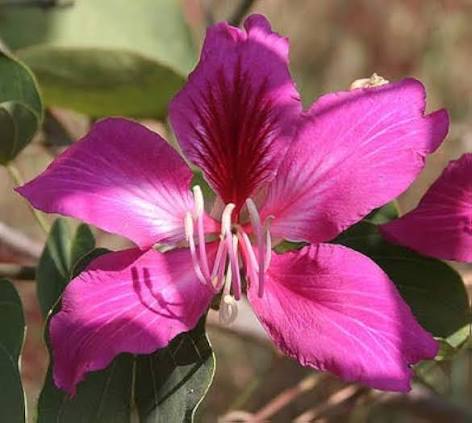
Kachnar (Bauhinia variegata, family Fabaceae/Leguminosae) — also known as Orchid Tree, Mountain Ebony, or Camel’s Foot Tree — is a medium-sized deciduous tree widely distributed across the Indian subcontinent, Southeast Asia, and tropical Asia. The name “Bauhinia” honours the 16th-century Swiss botanists Johann and Caspar Bauhin (brothers), and the twin-lobed leaf is said to resemble their partnership. The strikingly beautiful purple-pink flowers (orchid-like in appearance) bloom before the leaves in spring, making Kachnar one of India’s most recognisable ornamental trees. In Ayurveda, Kanchnar (Sanskrit name) appears in classical texts as the primary herb for Galaganda (goitre), Gandamala (lymph node swelling, particularly cervical), Granthi (any abnormal tissue growth or cyst), and Arsha (haemorrhoids). The bark, buds, and flowers are the primary medicinal parts; the flower buds and tender leaves are also eaten as vegetables in many parts of India.
Key Compounds in Kachnar
Kachnar’s pharmacologically active compounds include: Flavonoids — kaempferol, quercetin, and their glycosides, providing anti-inflammatory, antioxidant, and anti-tumour activity; Bauhiniastatins — specific Bauhinia flavonoids with reported anti-tumour activity; Tannins — beta-sitosterol glycoside and other tannins providing astringent and antimicrobial properties; Beta-sitosterol — anti-inflammatory, thyroid-modulating phytosterol; Lupeol — triterpenoid with anti-inflammatory and anti-tumour activity documented in multiple studies; Gallic acid and ellagic acid — antioxidant phenolic acids; Glycosides — specifically 5,7-dihydroxy flavone glycosides; and Tannase enzyme — documented in the bark. The combination of lupeol, kaempferol, beta-sitosterol, and tannins creates a multi-mechanism anti-inflammatory and lymphatic-regulating profile. See Wikipedia: Lupeol.
Top Health Benefits of Kachnar
Kachnar Benefits for Thyroid and Lymphatic Health
Kachnar’s most significant and distinctive benefits are for thyroid and lymphatic conditions. For thyroid: animal studies show Kachnar bark extract significantly reduces TSH (thyroid-stimulating hormone) levels and reduces thyroid gland weight in hypothyroid models — suggesting TSH-suppressing or thyroid hormone-modulating activity consistent with its classical use for Galaganda (goitre). The beta-sitosterol and flavonoids may modulate thyroid peroxidase activity, relevant to both goitre and hypothyroid conditions. For lymphatic disease: Kachnar’s anti-inflammatory, lymphagogue (lymph-moving), and anti-proliferative compounds reduce lymph node swelling, resolve lymphatic cysts, and reduce inflammatory lymphadenopathy — the classical Gandamala (cervical lymph node swelling) indication. Kanchnar Guggulu (a classical compound formulation) is the standard Ayurvedic prescription for lymphatic and thyroid conditions.
Kachnar for Tumours, Skin Conditions, and Digestion
Kachnar’s Granthi (growth/cyst) reducing application reflects genuine anti-proliferative and anti-tumour research findings. Lupeol and kaempferol have documented pro-apoptotic (cancer-cell-killing) activity in laboratory studies against multiple cancer cell lines. Animal studies with Kachnar bark extract show significant anti-tumour activity in carcinogen-induced tumour models. For skin conditions: the bark decoction wash is effective for eczema, psoriasis, and skin ulcers through its combined antimicrobial, anti-inflammatory, and wound-healing tannin and flavonoid content. For digestion: Kachnar buds (eaten as vegetable) improve digestive function; the bark astringency reduces diarrhoea; and the bitter components stimulate digestive secretions. The flower buds and tender leaves are nutritious vegetables rich in iron and calcium.
Medicinal Properties of Kachnar
How Kachnar Works as a Natural Remedy
The thyroid-modulating mechanism: beta-sitosterol inhibits thyroid peroxidase activity, reducing thyroid hormone overproduction or normalising abnormal TSH-driven enlargement; flavonoids modulate thyroid hormone receptor signalling. The lymphatic mechanism: kaempferol and quercetin inhibit NF-kB and AP-1 inflammatory transcription factors that drive lymph node inflammation and reactive lymphadenopathy; lupeol inhibits inflammatory prostaglandin synthesis. The anti-proliferative mechanism: lupeol induces apoptosis (programmed cell death) in abnormal proliferating cells through caspase pathway activation; kaempferol inhibits DNA synthesis in rapidly dividing cells. The astringent wound-healing mechanism: tannins precipitate surface proteins, forming a protective barrier, reducing secretions, and promoting wound closure.
Kachnar in Ayurveda and Traditional Medicine
In Ayurveda, Kanchnar (Kachnar) is classified as Kashaya (astringent) and Tikta (bitter) in taste, Laghu (light) and Ruksha (dry) in quality, and Sheeta (cooling) in potency. Its key properties include Lekhana (scraping — reducing abnormal tissue), Krimighna (antimicrobial), Vrana Ropana (wound healing), and Granthihara (tumour/cyst-reducing). The classical formulation Kanchnar Guggulu — combining Kachnar bark with Guggulu resin, Triphala, Trikatu, and other herbs — is Ayurveda’s primary prescription for Gandamala, Galaganda, and Granthi. This classical formulation has been used continuously for over 1,000 years and remains the standard Ayurvedic treatment for thyroid enlargement, lymphatic disorders, and benign growths.
How to Use Kachnar — Practical Usages
Kachnar Bark Decoction and Powder
Bark decoction for thyroid and lymphatic conditions: boil 10–15g of dried Kachnar bark in 400ml water, reduce to 100ml; drink 50ml twice daily before meals. This is the standard Kwatha used in Ayurvedic clinical practice. Kachnar bark powder (Churna): 3–5g twice daily with warm water before meals. Kanchnar Guggulu tablets (the classical compound formulation) are the most convenient and clinically used form — 2 tablets (500mg each) twice or three times daily with warm water under qualified Ayurvedic physician guidance. Flower bud vegetable: eating Kachnar flower buds prepared as vegetable (sabzi) during the flowering season provides the food-medicine benefits of its flavonoid and mineral content.
Kachnar as a Supplement
Kachnar bark and Kanchnar Guggulu are available from all major Ayurvedic manufacturers including Baidyanath, Dabur, Himalaya, and Patanjali. For thyroid conditions specifically, Kanchnar Guggulu is the standard Ayurvedic prescription and provides better bioavailability of Kachnar’s compounds through the Guggulu resin’s lipid-carrier enhancement. Use under qualified Ayurvedic physician guidance for thyroid and lymphatic conditions — these require proper diagnosis, monitoring, and typically multi-herb formulation approaches. Regular thyroid function monitoring (TSH, T3, T4) is appropriate when using Kachnar for thyroid conditions alongside or instead of conventional thyroid medications.
Side Effects and Precautions of Kachnar
- Thyroid medication interaction: Kachnar has thyroid-modulating activity — people on thyroid medications (levothyroxine, carbimazole) should use under physician guidance and monitor thyroid function regularly; additive effects can cause hypothyroidism or hyperthyroidism
- Pregnancy: avoid medicinal doses during pregnancy — the anti-proliferative compounds and uterine effects are insufficiently studied for pregnancy safety
- Dryness: the Ruksha (dry) and Kashaya (astringent) nature can cause dryness in Vata individuals — balance with adequate oils, ghee, and fluids in the diet
- Serious tumours: Kachnar has anti-proliferative properties supportive of benign growths management; malignant tumours require conventional oncological management — Kachnar is supportive, not curative for cancer
Frequently Asked Questions About Kachnar
What are the main Kachnar benefits for health?
Key Kachnar benefits: thyroid hormone and TSH modulation for goitre and thyroid disorders, lymph node swelling and lymphadenopathy resolution through anti-inflammatory Lekhana action, anti-proliferative and apoptotic activity supporting benign growth management, skin wound healing and skin disease management through tannin and flavonoid content, digestive astringent and anti-diarrhoeal action, nutritive food-medicine value of flower buds, and antimicrobial action for infections.
Can Kachnar help with thyroid disorders?
Kachnar is Ayurveda’s primary herb for Galaganda (goitre) — thyroid enlargement in the Ayurvedic classification. Animal studies confirm thyroid-modulating activity including TSH suppression and reduced thyroid gland size. Kanchnar Guggulu, which contains Kachnar as the primary herb, has significant clinical use in hypothyroidism, goitre, and thyroid nodules in Ayurvedic practice. For thyroid conditions, use under qualified physician guidance — thyroid function tests before and during treatment are appropriate to monitor response and avoid over- or under-treatment. Kachnar may complement conventional thyroid care or, in some cases, serve as an alternative for people seeking natural thyroid management.
Is Kachnar the same as Kanchnar?
Yes — Kanchnar is the Sanskrit name and Kachnar is the common Hindi name for the same plant, Bauhinia variegata. Both names refer to the same medicinal tree. “Kanchnar Guggulu” uses the Sanskrit botanical name in the formulation. Regional variations include Kaniar (Punjabi), Kanchanara (Bengali), and Devakanchan (Marathi). The medicinal bark and flowers are used interchangeably regardless of which regional name is used. When buying Kachnar/Kanchnar bark or supplements, verify the botanical name (Bauhinia variegata) to ensure you have the correct species among the many Bauhinia species found in India.
How long does Kachnar take to show benefits for lymph nodes?
For lymphadenopathy (swollen lymph nodes) and Gandamala (cervical lymph node swelling), Kanchnar Guggulu and Kachnar decoction typically require 4–12 weeks of consistent use to show measurable reduction. Acute reactive lymphadenopathy from infections often resolves faster; chronic or fibrotic lymphadenopathy takes longer. In Ayurvedic clinical practice, a minimum 3-month course is typically recommended for Gandamala assessment. Combine with appropriate diet modifications (reduced Kapha-increasing foods, increased bitter and astringent tastes) and lifestyle changes for best outcomes. If lymph nodes don’t reduce significantly after 3 months of treatment, further medical evaluation to rule out underlying causes is important.
Kachnar benefits position it as one of Ayurveda’s most specific and evidence-aligned herbs for the thyroid and lymphatic system — conditions where modern medicine offers limited gentle options for chronic management. The bark decoction or Kanchnar Guggulu, used consistently under qualified guidance, represents genuine Ayurvedic medicine at its most clinically practical. The beautiful flowering Kachnar trees lining Indian roadsides and gardens contain, in their bark, one of Ayurveda’s most targeted lymphatic and glandular medicines.
Add comment