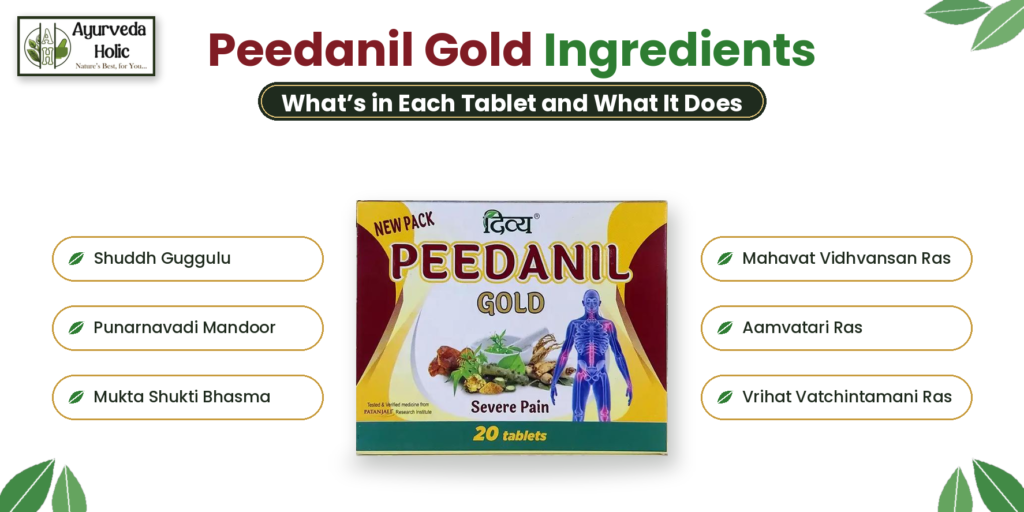
Short answer. Peedanil Gold ingredients, as printed on several retailer labels, are purified guggulu, Punarnavadi Mandoor, Mukta Shukti Bhasma and three classical ras preparations. Those are Mahavatvidhwansan Ras, Amvatari Ras and Brihat Vatchintamani Ras. The ras preparations are mineral-based. That’s the part you should know about before you start.
Most people buy Peedanil Gold for joint pain without ever reading the label. Fair enough. The label’s full of Sanskrit names. So here’s what each Peedanil Gold ingredient is, what Ayurveda uses it for, and why a couple of them call for care.
Peedanil Gold composition per tablet
This is the composition several sellers print for one tablet. Packs can change, so always check yours.
| Ingredient | Amount per tablet |
|---|---|
| Shuddh Guggulu (purified guggul resin) | 250 mg |
| Punarnavadi Mandoor | 60 mg |
| Mukta Shukti Bhasma | 60 mg |
| Mahavatvidhwansan Ras | 60 mg |
| Amvatari Ras | 60 mg |
| Brihat Vatchintamani Ras | 10 mg |
There are also binders and fillers like gum acacia and talc. They hold the tablet together.
One thing to flag. Some listings online, including older ones, describe the tablet as containing Nirgundi, Parijat or Ashwagandha. The labels we checked don’t list those. Trust the box in your hand over any website.
Shuddh Guggulu, the main ingredient
Guggulu is a resin from the Commiphora tree. “Shuddh” means it’s been purified, traditionally by boiling it with herbal decoctions. It’s the heart of most Ayurvedic joint formulas. Yograj Guggulu. Mahayograj Guggulu. Kaishore Guggulu. All built on it.
Ayurveda sees guggulu as warming and penetrating. It’s used to clear ama and calm Vata in the joints. Modern studies have looked at guggul for knee osteoarthritis and cholesterol. Results are mixed. Some small trials found less pain. Others found little effect.
Guggulu has its own side effects and drug interactions. We cover them in our guggul side effects guide. For background, see our guggul introduction.
Punarnavadi Mandoor
This one’s a classical iron formula. Mandoor is processed iron oxide. It’s mixed with Punarnava and other herbs. Ayurveda uses it for pandu, which roughly matches anaemia, and for swelling.
Why’s it in a joint tablet? Punarnava is traditionally used to reduce swelling and fluid. That fits the swollen-joint pattern Ayurveda calls amavata. It also means Peedanil Gold contains some iron. That matters if you have thalassaemia trait or take iron already.
Mukta Shukti Bhasma
Pearl oyster shell, calcined into a fine ash. It’s mostly calcium. Ayurveda uses it as a cooling ingredient and for acidity. In a heating formula full of guggulu, it may be there to balance things out.
Calcium can block the absorption of some medicines, like thyroid tablets and certain antibiotics. Spacing doses helps. Your doctor can tell you how far apart.
The three ras preparations
Here’s where it gets serious. Ras preparations come from rasa shastra, the branch of Ayurveda that works with metals and minerals. Classical recipes for all three are built on purified mercury and sulphur. Other processed minerals and herbs are added.
Mahavatvidhwansan Ras. The name means “great destroyer of Vata”. It’s a classical formula for Vata disorders like joint and nerve pain.
Amvatari Ras. “Enemy of amavata.” It’s classically used for joint pain with swelling and stiffness. Its recipe also includes herbs like triphala and chitrak.
Brihat Vatchintamani Ras. A classical formula for severe Vata conditions. Its traditional recipe includes gold bhasma, along with silver, mica, iron, pearl and coral preparations. It’s the smallest amount in the tablet. It’s also likely why the product’s called Gold.
Rasa shastra texts describe long purification steps meant to make these metals safe. Done well, that’s the theory. But studies of Ayurvedic products bought online have found lead, mercury or arsenic in some herbo-mineral medicines. Quality depends on the maker and the batch. So these ingredients are the reason Peedanil Gold should be taken for a limited time, with a doctor’s advice.
How it compares with other joint tablets
| Tablet | Main base | Contains minerals? |
|---|---|---|
| Peedanil Gold | Guggulu plus three ras preparations | Yes |
| Yograj Guggulu | Guggulu plus herbs | No |
| Mahayograj Guggulu | Guggulu plus herbs and bhasmas | Yes |
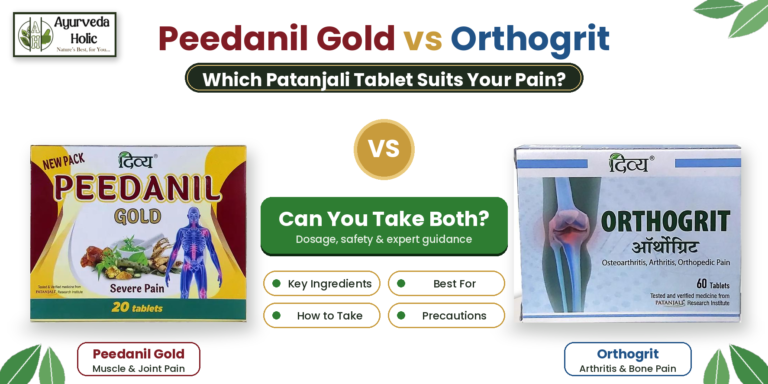
| Orthogrit | Herbs such as hadjod and guggulu | Check the pack |
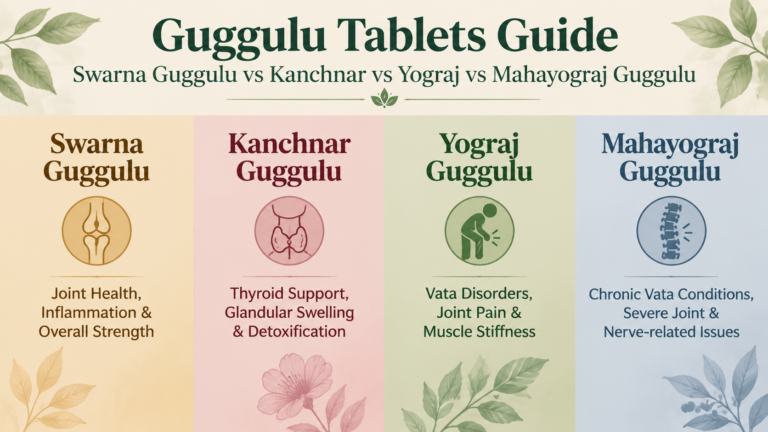
If you’d rather start with a herbs-only option, Yograj Guggulu is the usual gentler choice. Ask your practitioner which suits your pain. Our guggulu tablets guide compares the classical ones.
Why mineral formulas need more care
Herbs leave the body fairly quickly. Metals don’t always. Mercury and lead can build up over time, mainly in the kidneys and nerves. That’s why rasa shastra texts themselves give strict doses and limited courses. It’s also why doctors ask about kidney function before long use.
Signs worth reporting to a doctor include a metallic taste, unusual tiredness, tingling in the hands or feet, and changes in how much you pass urine. They’re rare. But they’re the reason not to take a tablet like this for months on your own.
What this mix is trying to do
Put together, the ingredients follow a clear Ayurvedic logic.
- Guggulu clears ama and calms Vata.
- The ras preparations add classical strength for Vata and amavata pain.
- Punarnavadi Mandoor targets swelling.
- Mukta Shukti cools and balances.
It’s a “cover both patterns” formula. Dry, Vata-type pain and swollen, heavy amavata pain. For what people take it for and how to take it, see our Peedanil Gold uses and dosage guide.
What the research says
We found one published study on the whole formula. It was done in rats with induced osteoarthritis. The rats given Peedanil Gold had lower inflammatory markers and less joint damage. There’s no published human trial we could find. And there’s no published heavy-metal testing of the finished tablet that we could locate.
How to read your pack
- Look for the full ingredient list with amounts.
- Check the batch number and expiry date.
- Look for “to be taken under medical supervision”. It’s common on mineral formulas. Take it seriously.
- Buy sealed packs from a licensed seller.
Our guide on how to buy gold Ayurvedic medicines safely has more checks.
Who should be careful with these ingredients
- Pregnant or breastfeeding women
- Children
- People with kidney or liver disease
- Anyone already taking guggulu, iron or calcium supplements
- People on thyroid, blood-thinning or heart medicines
Why ingredient lists online don’t match
You might find three different Peedanil Gold ingredient lists on three websites. Here’s why. Some sellers copy old descriptions. Some guess based on the name. Some mix it up with other Peedanil products. The pack in your hand is the source to trust.
Frequently asked questions
What are the ingredients in Peedanil Gold?
Retailer labels list purified guggulu, Punarnavadi Mandoor, Mukta Shukti Bhasma, Mahavatvidhwansan Ras, Amvatari Ras and Brihat Vatchintamani Ras. Check your pack.
Does Peedanil Gold contain real gold?
One ingredient, Brihat Vatchintamani Ras, traditionally contains gold bhasma. It’s a small part of the tablet.
Does Peedanil Gold contain mercury?
Classical ras preparations are made with purified mercury and sulphur. That’s why it should be taken only with a doctor’s advice.
Is Peedanil Gold purely herbal?
No. It’s a herbo-mineral formula. It contains herbs plus processed minerals.
Does Peedanil Gold contain steroids?
Steroids aren’t listed on the label. If you’re worried about any product, ask your doctor or pharmacist.
Can I take Peedanil Gold with Yograj Guggulu?
Not without advice. Both contain guggulu, so you’d be doubling up.
Why does my pack list different ingredients from a website?
Listings can be outdated or wrong. Your pack is the most reliable source.
Are Peedanil Gold ingredients vegetarian?
The herbs and minerals are plant- and mineral-based. Mukta Shukti comes from pearl oyster shell, so strict vegans may want to avoid it.
Shop: Patanjali Divya Peedanil Gold Tablets
This article is for general information and isn’t medical advice. Please talk to a qualified doctor before starting any herb or changing any medicine.