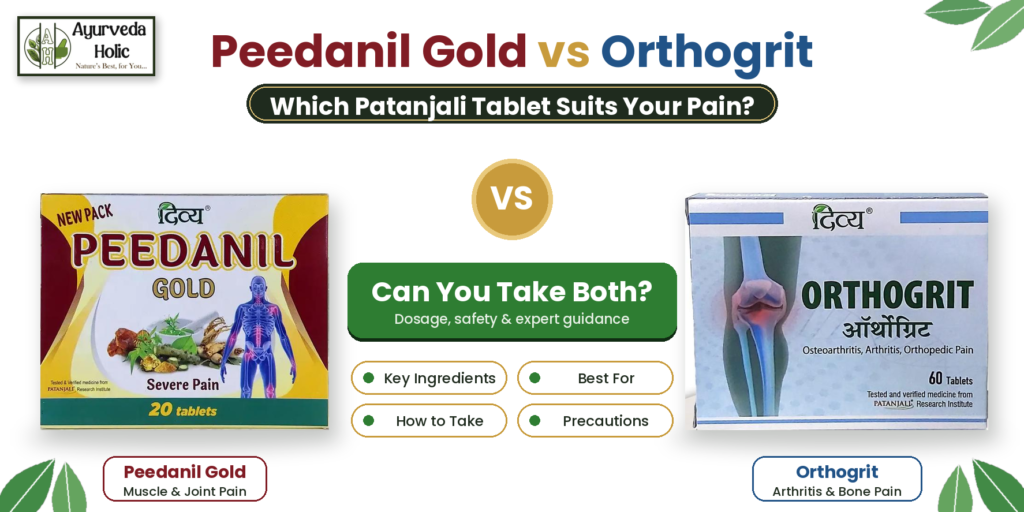
Short answer. Peedanil Gold is a herbo-mineral tablet aimed at joint and muscle pain. It contains classical ras preparations made with mercury and sulphur, so it needs a doctor’s advice and short courses. Orthogrit is a herbal-based tablet for bone and joint support. It’s built around Hadjod, Shallaki and Guggulu. For milder, everyday stiffness, Orthogrit is the gentler place to start. Don’t take both together unless a practitioner tells you to.
Peedanil Gold vs Orthogrit is a question we hear a lot about Patanjali’s joint range. Both come from Divya Pharmacy. Both are tablets. Both sit on the same shelf. And plenty of people search “Peedanil Gold and Orthogrit” because they’ve been told to take them together. So let’s sort out what each one is, how they differ, and when the pair makes sense.
Peedanil Gold vs Orthogrit at a glance
| Peedanil Gold | Orthogrit | |
|---|---|---|
| Maker | Divya Pharmacy, Haridwar | Divya Pharmacy, Haridwar |
| Type | Herbo-mineral | Mostly herbal, with a calcium-based bhasma |
| Main focus | Joint and muscle pain | Bone and joint support |
| Key ingredients | Guggulu plus three ras preparations | Hadjod, Shallaki, Guggulu and other herbs |
| Contains mercury-based ras? | Yes | Not listed |
| Care level | High. Doctor’s advice, short courses | Moderate. Check if you take other medicines |
| Common pack | 20 tablets | 60 tablets |
What’s in Peedanil Gold
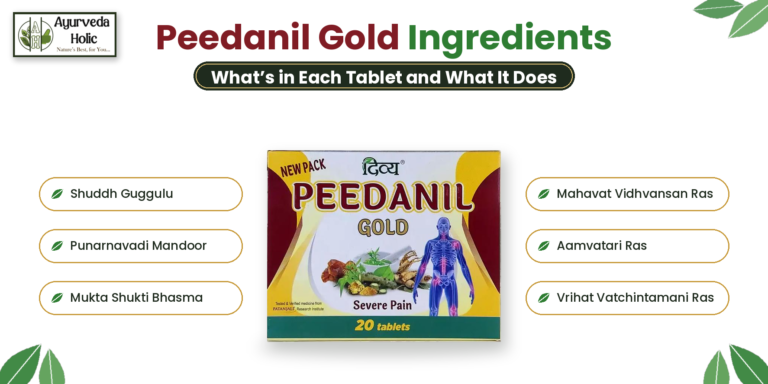
Retailer labels list six ingredients per tablet. Shuddh Guggulu is the biggest, at 250 mg. Then there’s Punarnavadi Mandoor (an iron formula), Mukta Shukti Bhasma (pearl oyster calcium) and three ras preparations. Those are Mahavatvidhwansan Ras, Amvatari Ras and Brihat Vatchintamani Ras.
The ras preparations are what make Peedanil Gold different. They’re classical mineral formulas, traditionally made with purified mercury and sulphur. One of them contains gold bhasma. That’s likely where the name comes from. Our Peedanil Gold ingredients guide breaks them down.
What’s in Orthogrit
Orthogrit’s composition is less tidy online. Retailer listings don’t agree on the amounts, so we won’t quote milligrams. Check your own pack. The herbs named across listings include these.
- Hadjod (Asthisamharaka). Its name means “bone joiner”. It’s Ayurveda’s classic herb for bones.
- Shallaki (Boswellia). Indian frankincense. The best-studied of these herbs for knee pain.
- Shuddh Guggulu. The usual resin base for joint formulas.
- Ashwagandha. A strengthening herb.
- Punarnava. Traditionally used for swelling.
- Giloy (Guduchi). A classic herb for inflammation and immunity.
- Laksha. Lac, traditionally used for bone healing.
- Mukta Shukti Bhasma. Pearl oyster ash. Mostly calcium.
What’s missing matters too. None of the listings we checked include mercury-based ras preparations. That’s the big safety difference between the two.
Peedanil Gold vs Orthogrit, the core difference
Think of it this way. Peedanil Gold is a pain formula. Orthogrit is a bone and joint support formula.
Peedanil Gold is built on classical ras preparations for Vata pain and amavata, Ayurveda’s term for stiff, swollen joints. It’s aimed at stubborn, stronger pain.
Orthogrit is built on Hadjod and Shallaki. Hadjod points it at bones. Shallaki and Guggulu point it at joint comfort. It’s aimed at longer-term support, and at people whose bones and joints feel weak rather than acutely painful.
Which one suits which situation
| Situation | Usual starting point |
|---|---|
| Mild, everyday knee or back stiffness | Orthogrit, with exercise |
| Joints feeling weak with age | Orthogrit, with calcium and vitamin D checked |
| Stubborn pain that a doctor has checked | Peedanil Gold, under supervision |
| Stiff, slightly swollen joints, Vata-type pain | Peedanil Gold, under supervision |
| After a fracture | Neither on your own. Follow your orthopaedic doctor |
| Hot, red, swollen joint or fever | Neither. See a doctor today |
| Pregnancy, children, kidney or liver disease | Avoid Peedanil Gold. Ask a doctor about any tablet |
Can you take Peedanil Gold and Orthogrit together?
Here’s the question behind most searches. Some Patanjali practitioners do prescribe the two together. If yours has, follow their dose and timing.
On your own, though, it isn’t a good idea. Here’s why.
- Double guggulu. Both contain it. More guggulu means more chance of stomach upset, rashes and drug interactions.
- Double calcium. Both contain Mukta Shukti Bhasma. That adds up, especially if you take a calcium supplement too.
- More to track. If you get a side effect, you won’t know which tablet caused it.
- Peedanil Gold’s minerals. Adding a second product doesn’t make the ras preparations any safer.
A simpler approach works for most people. Start with one tablet. Add warm oil massage and daily exercise. Review with your doctor after a few weeks. Only then think about changing or adding.
Dosage
Follow your own packs. Peedanil Gold’s pack directions are commonly two tablets twice a day, after meals. For Orthogrit, listings range from one to two tablets twice a day, after meals. Take both with lukewarm water, and never on an empty stomach. For more on Peedanil Gold, see our Peedanil Gold uses and dosage guide.
Side effects compared
| Peedanil Gold | Orthogrit | |
|---|---|---|
| Common | Stomach upset, acidity, loose motions, dark stools | Stomach upset, acidity |
| Skin | Rash in some people (guggulu) | Rash in some people (guggulu) |
| Longer-term concern | Metal build-up with long or repeated use | Few known concerns |
| Who must avoid | Pregnancy, children, kidney or liver disease | Pregnancy and children unless a doctor advises |
Both contain guggulu, which may affect thyroid levels and thin the blood a little. So both need a doctor’s okay if you take thyroid tablets, blood thinners or heart medicines. See Peedanil Gold side effects and drug interactions for the full list.
What the research says
There isn’t much for either. We found one published rat study on Peedanil Gold, which reported less joint inflammation. We didn’t find published trials on Orthogrit as a formula. Its single herbs have some research. Boswellia has several small human trials for knee pain with positive results. Hadjod has early studies on bone healing. Neither tablet has been tested head-to-head against the other, or against standard treatment.
Making either one work better
No tablet beats the basics for joint pain.
- Walk every day. Start short and build up.
- Strengthen the thighs. Slow sit-to-stands from a chair are a good start.
- Watch your weight. Each kilo off takes load off your knees.
- Keep joints warm. Ayurveda says cold aggravates Vata pain.
- Add warm oil massage. Peedanil Taila or Mahanarayan Tail work well. Skin only.
- Get calcium and vitamin D checked if you’re worried about bone strength.
Common mistakes
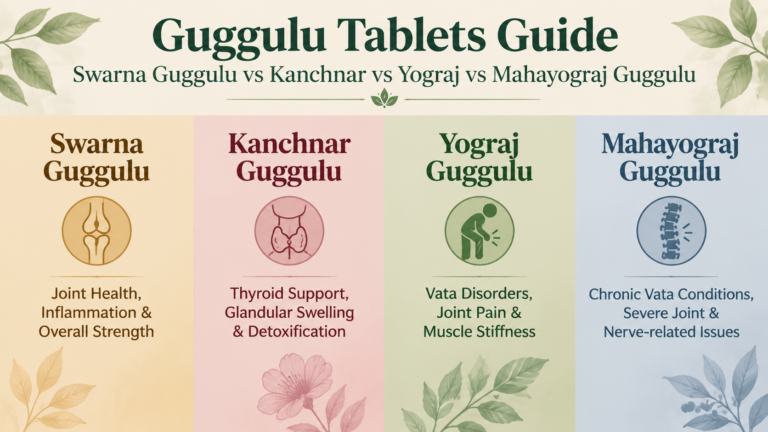
- Taking both tablets plus a third guggulu product, like Yograj.
- Choosing Peedanil Gold first for mild aches because it sounds stronger.
- Using either one to delay seeing a doctor after a fall or injury.
- Taking them for months with no review.
- Swallowing Peedanil oil. It’s for the skin only.
Frequently asked questions
What is the difference between Peedanil Gold and Orthogrit?
Peedanil Gold is a herbo-mineral pain formula with mercury-based ras preparations. Orthogrit is a herbal-based bone and joint formula. It’s built on Hadjod, Shallaki and Guggulu.
Can I take Peedanil Gold and Orthogrit together?
Only if a practitioner prescribes them together. Both contain guggulu and Mukta Shukti, so taking them on your own means doubling up.
Which is better for knee pain?
For mild knee stiffness, Orthogrit is the gentler start, along with exercise. Peedanil Gold is usually kept for stronger pain under a doctor’s eye.
Is Orthogrit safer than Peedanil Gold?
It doesn’t list mercury-based ras preparations, so it carries fewer long-term concerns. It still contains guggulu, so check with a doctor if you take other medicines.
Is Orthogrit good for bones?
Its main herb, Hadjod, is traditionally used for bones. It isn’t a replacement for calcium, vitamin D or treatment for osteoporosis.
Can I take Orthogrit after a fracture?
Only alongside your orthopaedic doctor’s treatment and with their okay.
Which one should older adults choose?
Older adults often take several medicines. Their kidneys can be weaker too. Orthogrit is usually the gentler choice, but they should ask a doctor first.
Hindi readers can see पीड़ानिल गोल्ड की पूरी जानकारी.
Shop: Patanjali Divya Orthogrit · Patanjali Divya Peedanil Gold Tablets
This article is for general information and isn’t medical advice. Please talk to a qualified doctor before starting any herb or changing any medicine.