
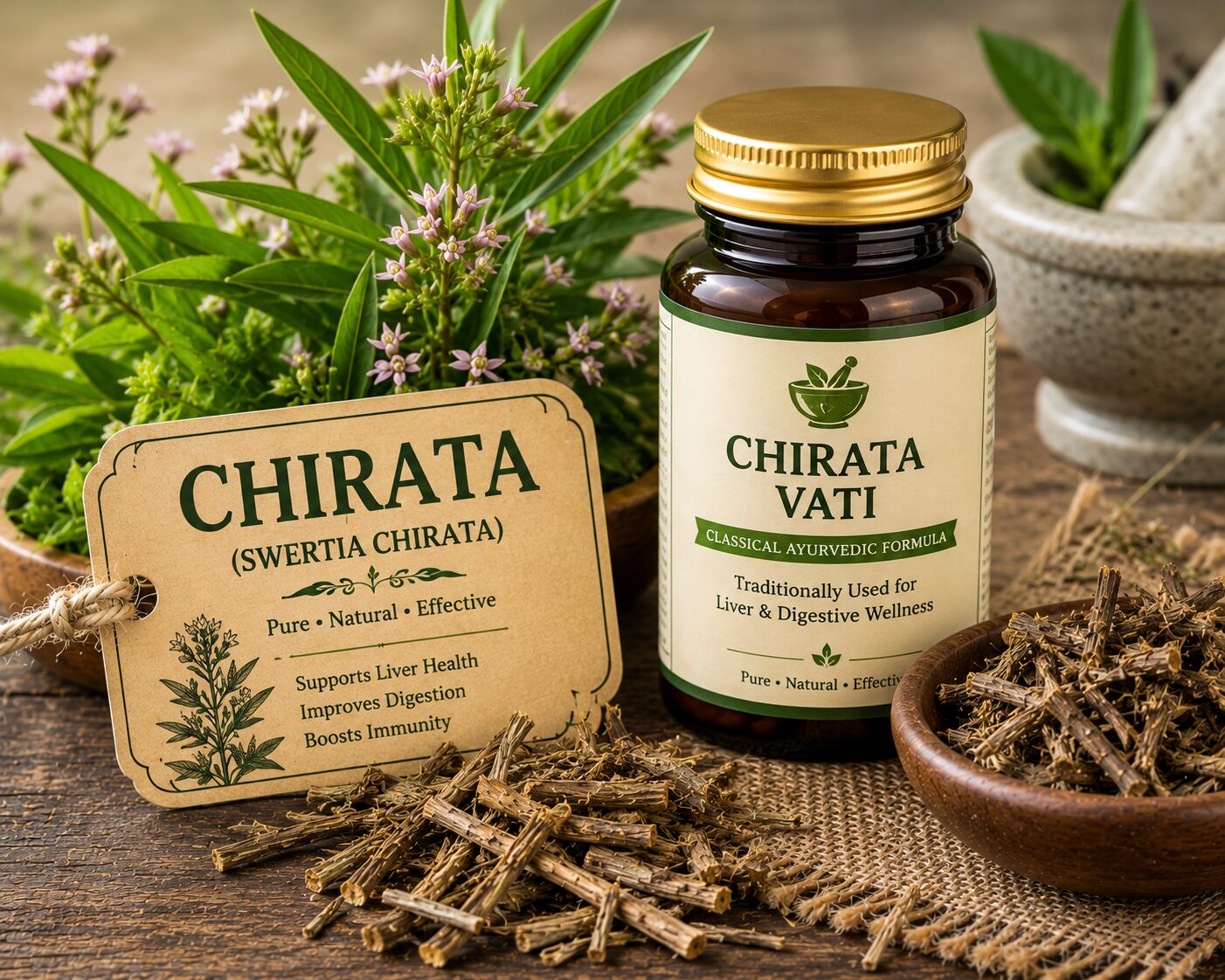
Chirata (Introduction, Benefits, and Usages)
Chirata benefits are built on one of the most concentrated collections of medicinal bitter compounds found in any plant on earth. Swertia chirata — called Kirata Tikta in Ayurveda — contains amarogentin, one of the most intensely bitter natural substances known, along with xanthones, iridoid glycosides, and mangiferin. These compounds deliver powerful fever-reducing, liver-protecting, blood sugar-lowering, antiparasitic, and antimicrobial effects that have made Chirata one of the most important herbs in Himalayan traditional medicine for generations. See Wikipedia: Swertia chirata. For related liver-protective herbs, explore Giloy and Daruharidra.
What Is Chirata? A Complete Introduction
Origin and History of Chirata
Chirata (Swertia chirata, also Swertia chirayita) is an annual or biennial herb native to the Himalayan region at altitudes of 1,200–3,000 meters — found across Nepal, Bhutan, Sikkim, the northeastern Indian Himalayan states, and parts of Tibet. The entire aerial plant (stems, leaves, flowers, roots) is medicinal — harvested just as the plant comes into flower, dried, and used in decoctions and powder preparations. Chirata has been so heavily wild-harvested for centuries that it’s now considered threatened in parts of its natural range, making sustainable cultivation increasingly important.
Key Compounds and Nutritional Profile
Amarogentin is Chirata’s defining compound — a secoiridoid glycoside that’s one of the most bitter natural substances known, detectable by taste at concentrations of 1 in 58 million. Beyond its bitterness, amarogentin has documented antiparasitic activity (against Leishmania donovani causing kala-azar), hepatoprotective effects, and potential anti-cancer properties. Swerchirin is a xanthone with documented insulin-secretagogue (pancreatic beta cell stimulating) effects. Mangiferin provides antioxidant, anti-inflammatory, and antiviral properties. Together these compounds explain Chirata’s diverse therapeutic applications. See Wikipedia: Amarogentin.
Top Health Benefits of Chirata
Chirata Benefits for Immunity and Overall Health
Chirata is Ayurveda’s most classical herb for fever — described in ancient texts as effective for virtually all fever types. The bitter compounds reduce fever through anti-inflammatory mechanisms (reducing the cytokines that trigger the fever response) and through direct antipyretic activity. Antimalarial properties are documented — swerchirin and other xanthones show significant in vitro antimalarial activity against Plasmodium falciparum, consistent with traditional Himalayan use for malarial fever. Mangiferin provides additional antiviral and immune-boosting effects. Pair with Giloy for comprehensive fever management.
Chirata for Skin, Hair, and Beauty
Chirata’s blood-purifying Raktashodhaka action in Ayurveda corresponds to its pharmacological reduction of circulating inflammatory mediators — directly benefiting inflammatory skin conditions like acne, eczema, and psoriasis. The liver-protective effects further support skin health by improving hepatic detoxification of skin-aggravating compounds. The cooling, Pitta-reducing nature makes it particularly indicated for hot, inflamed, Pitta-type skin eruptions. Regular Chirata decoction over 4–8 weeks is traditionally used for chronic skin conditions that have an internal inflammatory component.
Medicinal Properties of Chirata
How Chirata Works as a Natural Remedy
Chirata’s hepatoprotective mechanism is well-studied: it protects liver cells from toxic injury (both chemical and viral), reduces ALT and AST elevation (markers of liver cell damage), stimulates bile production and flow, and supports hepatic regeneration. Multiple animal studies confirm significant protection from carbon tetrachloride-induced liver damage. This liver protection is clinically relevant for jaundice, hepatitis, and fatty liver disease.
For blood sugar, swerchirin stimulates pancreatic beta cells to release insulin while simultaneously reducing oxidative damage to these cells. Animal studies show significant blood glucose reduction. The combination of blood sugar lowering and liver protection is particularly valuable for diabetic patients with concurrent fatty liver — an extremely common combination in clinical practice.
Chirata in Ayurveda and Traditional Medicine
In classical Ayurvedic texts, Kirata Tikta (Chirata) is classified as Tikta (intensely bitter), Sheeta (cooling), and Laghu (light) — reducing Pitta and Kapha strongly. Primary indications in the texts are Jwara (fever of all types), Kushtha (skin diseases), Prameha (diabetes), Kamala (jaundice and liver disease), Krimi (parasites), and Raktapitta (bleeding disorders). It’s a key ingredient in Panchatikta preparations — classical five-bitter formulas used for deep Pitta disorders and skin diseases. See Wikipedia: Swertia.
Chirata is not a supplement to take casually. Its intense Pitta-reducing action makes it genuinely contraindicated in already-Vata conditions, and its cooling, drying properties can cause harm if misapplied. Ayurvedic guidance on constitution-appropriate use is important here.
How to Use Chirata — Practical Usages
Chirata in Food, Tea, and Cooking
Cold infusion (preferred method): soak 2–3 grams of dried Chirata in 200 ml cold water overnight. Strain and drink in the morning. Cold infusion preserves heat-sensitive compounds better than boiling. The extreme bitterness can be moderated with a small amount of honey added after straining — don’t add honey to hot preparations.
Decoction: boil 2–5 grams in 400 ml water; reduce to 100 ml; drink twice daily with honey. Powder: 1–3 grams twice daily with honey. Most people find Chirata’s bitterness challenging — start with smaller amounts and use honey freely to make it palatable. The bitterness itself is therapeutically active, so don’t avoid it entirely.
Chirata as a Supplement or Topical Application
Chirata is available as standardised extract capsules — more palatable than powder and with consistent amarogentin content. Typical supplement doses are 300–500 mg of standardised extract twice daily. Compound Ayurvedic formulas containing Chirata (like Panchatikta Ghrita and various proprietary formulas) are the most practical form for most people. Topical use of Chirata decoction as a skin wash is sometimes used for acne and inflammatory skin conditions — the antimicrobial and anti-inflammatory properties work effectively on the skin surface as well as internally.
Side Effects and Precautions of Chirata
- Vata aggravation: Chirata’s strongly cooling and drying nature can aggravate Vata — causing dryness, constipation, and weakness in people with Vata-dominant constitutions or in cold seasons without appropriate warming herbs to balance it
- Pregnancy: absolutely contraindicated — Chirata may stimulate uterine contractions
- Blood sugar monitoring: can lower blood sugar — diabetics on medication must monitor glucose and adjust medications with their doctor
- Emaciation: contraindicated in severely underweight or debilitated individuals — its drying, Vata-aggravating nature worsens wasting conditions
- Children under 5: not suitable without Ayurvedic physician supervision
Frequently Asked Questions About Chirata
What are the main Chirata benefits for health?
The most documented Chirata benefits are fever reduction (antipyretic, antimalarial properties), liver protection and hepatitis support, blood sugar lowering (swerchirin stimulates insulin secretion), antiparasitic activity against Leishmania and intestinal parasites, antimicrobial action against common bacteria, and blood-purifying anti-inflammatory effects for skin conditions.
Is Chirata the same as Kalmegh?
No — Chirata (Swertia chirata) and Kalmegh (Andrographis paniculata) are completely different plants, though both are intensely bitter and share some therapeutic applications (fever, liver protection). Chirata’s primary active compounds are amarogentin and xanthones; Kalmegh’s are andrographolides. Both are important Ayurvedic bitters but shouldn’t be confused or used interchangeably without guidance.
How to use Chirata for liver health?
A 4–8 week course of Chirata cold infusion (2–3 grams soaked overnight in cold water, drunk in the morning) or standardised extract supplements, combined with dietary measures (reduced alcohol, fried foods, and refined carbohydrates), supports liver recovery and protection. Monitor liver enzymes at the beginning and end of the course to assess response. Combine with Daruharidra for enhanced hepatoprotective action.
Can Chirata help with malaria?
Traditional Himalayan medicine has used Chirata for malarial fever for centuries, and research confirms antimalarial activity of its xanthone compounds in vitro. It isn’t a replacement for proven antimalarial treatment in active malaria — but Chirata tea has been used as supportive therapy and prevention in endemic areas where conventional drugs weren’t historically available. In modern practice, use proven antimalarial treatment and consider Chirata as supportive immune and fever management.
What is the difference between Chirata decoction and cold infusion?
Cold infusion (soaking in cold water overnight) is generally preferred for Chirata because some of its heat-sensitive glycosides and xanthones degrade at boiling temperatures. The cold infusion is also less intensely bitter, making it more palatable. Decoctions are still effective and widely used — the choice depends on which compounds you’re primarily targeting and personal palatability preferences.
Chirata benefits are as profound as its bitterness suggests. When a plant has evolved to concentrate one of the most bitter substances known in any living organism, something significant is happening pharmacologically — and the research confirms it. If you’re dealing with fever, liver conditions, blood sugar challenges, or chronic skin disease, Chirata deserves serious consideration under qualified Ayurvedic or integrative medical guidance. Its bitter medicine is powerful, precise, and proven across thousands of years of clinical use in the Himalayan tradition.

Add comment