
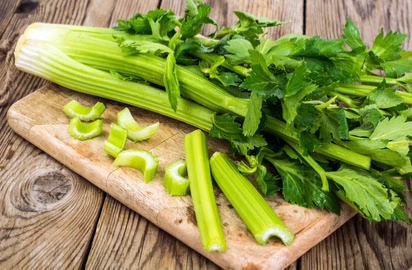
Celery (Introduction, Benefits, and Usages)
Celery benefits have made it one of the most talked-about health foods of the last decade — and while the viral “celery juice movement” exaggerated some claims, the genuine therapeutic properties of this plant are real and well-supported by pharmacology. Celery isn’t just water and fibre. It contains a specific set of phytochemicals — particularly phthalides, flavonoids, and polyacetylenes — that have documented effects on blood pressure, inflammation, joint health, and digestion. Let’s look at what celery actually does and how to use it intelligently. See Wikipedia: Celery. For related digestive herbs, explore Fennel Seeds and Ajwain.
What Is Celery? A Complete Introduction
Origin and History of Celery
Celery (Apium graveolens) originated in the Mediterranean and was known to the ancient Greeks, Egyptians, and Romans primarily as a medicinal plant before its culinary development. Wild celery (smallage) was used as a diuretic, sedative, and anti-rheumatic herb. The edible stalked variety was developed in Italy in the 17th century. Ancient Greeks used celery garlands in burial rites and awarded celery wreaths to athletic victors.
In Ayurveda, celery seed (Ajamoda) is the primary medicinal part used — different from the stalk-focused Western use. Celery seed has a distinct, concentrated phytochemical profile and more intense therapeutic properties than the fresh stalk. Both are discussed here, as they have overlapping but distinct applications.
Key Compounds and Nutritional Profile
Celery’s medicinal properties come primarily from phthalides (particularly 3-n-butylphthalide/3nB) — compounds that relax arterial smooth muscle and reduce blood pressure, and have documented sedative and anti-anxiety effects. Celery also contains apigenin (a flavonoid with anti-inflammatory, anti-anxiety, and anticancer properties), luteolin, quercetin, kaempferol, polyacetylenes, and the volatile oils responsible for celery’s distinctive aroma.
The whole stalk is 95% water but provides meaningful amounts of vitamin K1, folate, potassium, and vitamin C alongside these bioactive phytochemicals. Celery seeds are significantly more concentrated in phthalides and essential oils than the stalk.
Top Health Benefits of Celery
Celery Benefits for Immunity and Overall Health
Celery’s apigenin has been extensively studied for its anti-inflammatory and immune-modulating properties. It inhibits NF-kB signalling — the master inflammatory pathway — reducing production of inflammatory cytokines. Apigenin also has documented anti-cancer properties in laboratory studies, showing selective pro-apoptotic effects on cancer cells while protecting normal cells.
The antioxidant compounds in celery (particularly luteolin and quercetin) provide systemic protection against oxidative stress. Regular celery consumption is associated in epidemiological studies with reduced risk of cardiovascular disease and certain cancers, consistent with the anti-inflammatory mechanisms.
Celery for Skin, Hair, and Beauty
The high water content, vitamin C, and antioxidant flavonoids in celery support skin hydration, collagen synthesis, and protection against UV-induced oxidative damage. Vitamin K in celery supports wound healing and may reduce the appearance of bruising and dark circles under the eyes (topical application of vitamin K is used in dermatology for periorbital bruising).
Celery juice applied topically is used in some folk traditions to soothe acne and reduce skin inflammation — the apigenin’s anti-inflammatory action and celery’s naturally slightly alkaline pH may support this application. Celery seed oil is used in some natural hair products for scalp stimulation.
Medicinal Properties of Celery
How Celery Works as a Natural Remedy
The 3-n-butylphthalide in celery works on blood pressure through a specific mechanism: it relaxes smooth muscle cells in artery walls, reducing vascular resistance and lowering blood pressure. A study in China found that celery seed extract (equivalent to 4 stalks of celery daily) reduced blood pressure by an average of 12–14 mmHg systolic in people with hypertension. This is a clinically meaningful reduction.
For uric acid and gout, celery has a diuretic action that increases urinary uric acid excretion, and apigenin inhibits xanthine oxidase — the enzyme that produces uric acid. Both mechanisms support celery’s traditional use for gout management. Celery seed is specifically indicated for this purpose in multiple herbal medicine traditions.
Celery in Ayurveda and Traditional Medicine
In Ayurveda, celery seed (Ajamoda) is classified as digestive stimulant (Deepana), carminative (Vata-reducing in the digestive tract), diuretic, and anti-rheumatic. It’s used for Vata disorders with joint pain, digestive gas and bloating, urinary conditions, and respiratory conditions with mucus accumulation. Ajamoda is an ingredient in classical Ayurvedic compound preparations including Ajamodadi Churna — a traditional carminative and digestive formula.
European herbal tradition (Culpeper, Dodoens, Matthioli) used wild celery (smallage) as a diuretic for kidney stones and gout, a digestive tonic, and a mild sedative. These traditional applications align well with what modern pharmacology reveals about phthalides and apigenin. See Wikipedia: Apium graveolens.
How to Use Celery — Practical Usages
Celery in Food, Tea, and Cooking
Eat 2–4 raw celery stalks daily for blood pressure and anti-inflammatory benefits — this roughly corresponds to the doses used in blood pressure research. Raw is best for phthalides and apigenin — heat degrades these compounds significantly. Celery pairs naturally with Cucumber and lemon in fresh salads and juices for a combined diuretic and anti-inflammatory effect.
Celery seed tea: steep 1 teaspoon of celery seeds in boiling water for 15 minutes; drink 2–3 cups daily for urinary support, gout management, and digestive bloating. Celery seed is more concentrated than the stalk — use it specifically when targeting urinary or joint conditions.
Celery as a Supplement or Topical Application
Celery seed extract is available as a standardised supplement — typical doses of 150–300 mg daily of celery seed extract are used in clinical contexts for blood pressure and gout. These provide more consistent phthalide levels than fresh celery.
Fresh celery juice (250–500 ml on an empty stomach) is the approach popularised recently for digestive health. While the viral claims were often exaggerated, drinking celery juice does provide a concentrated dose of apigenin, phthalides, and electrolytes that genuinely supports digestion and blood pressure when consumed consistently.
Side Effects and Precautions of Celery
- Photosensitivity: celery (especially wild celery) contains psoralens — compounds that increase UV sensitivity. Large amounts of celery juice can cause phototoxic reactions in fair-skinned individuals with sun exposure
- Allergy: celery allergy is among the most common food allergies in Europe — can cause severe reactions in sensitised individuals, particularly those with mugwort pollen allergy
- Blood thinners: celery’s vitamin K content may interfere with warfarin — maintain consistent intake if on anticoagulants
- Pregnancy: culinary use is safe; avoid celery seed supplements in pregnancy as they may stimulate uterine contractions
- Kidney conditions: celery’s diuretic effect means people with reduced kidney function should moderate large therapeutic doses
Frequently Asked Questions About Celery
What are the top celery benefits for health?
The most evidence-supported celery benefits are blood pressure reduction (phthalides relax arterial walls), anti-inflammatory effects (apigenin inhibits NF-kB), uric acid reduction for gout (diuretic action + xanthine oxidase inhibition), digestive carminative effects (celery seed), and antioxidant protection against chronic disease.
How to use celery for blood pressure?
Eat 4 stalks of raw celery daily, or take standardised celery seed extract (150–300 mg daily). The blood pressure effects require consistent daily use for at least 2–3 weeks before results are measurable. Pairing celery with dietary potassium from other vegetables and reducing sodium enhances the blood pressure-lowering effect.
Is celery good for uric acid and gout?
Yes — celery seed is one of the best-studied herbal approaches for gout. The combination of increased urinary uric acid excretion (diuretic) and xanthine oxidase inhibition (reducing uric acid production) gives it a dual mechanism similar to conventional gout medications. Clinical reports and case studies support significant uric acid reduction with celery seed extract.
What is celery seed used for in Ayurveda?
Celery seed (Ajamoda) in Ayurveda is primarily a digestive stimulant and carminative, used for intestinal gas, bloating, sluggish digestion, and Vata-type digestive disorders. It’s also used as a diuretic for urinary conditions and as an anti-rheumatic for joint pain. Ajamodadi Churna is the most common classical compound formula containing celery seed.
How much celery should I eat for health benefits?
Research on blood pressure used the equivalent of about 4 stalks daily. For general anti-inflammatory and antioxidant benefits, eating celery regularly as part of a vegetable-rich diet — even 1–2 stalks most days — contributes to the cumulative effect. Don’t obsess over daily targets; consistent inclusion matters more than precise quantity.
Celery benefits are genuine — just not magical. It lowers blood pressure through phthalides, fights inflammation through apigenin, reduces uric acid through dual mechanisms, and supports kidney health through diuresis. Eat it raw most days, add celery seed to your spice rack for digestive support, and consider celery seed extract if specifically addressing blood pressure or gout. Simple, affordable, and genuinely effective when used consistently.


Add comment