
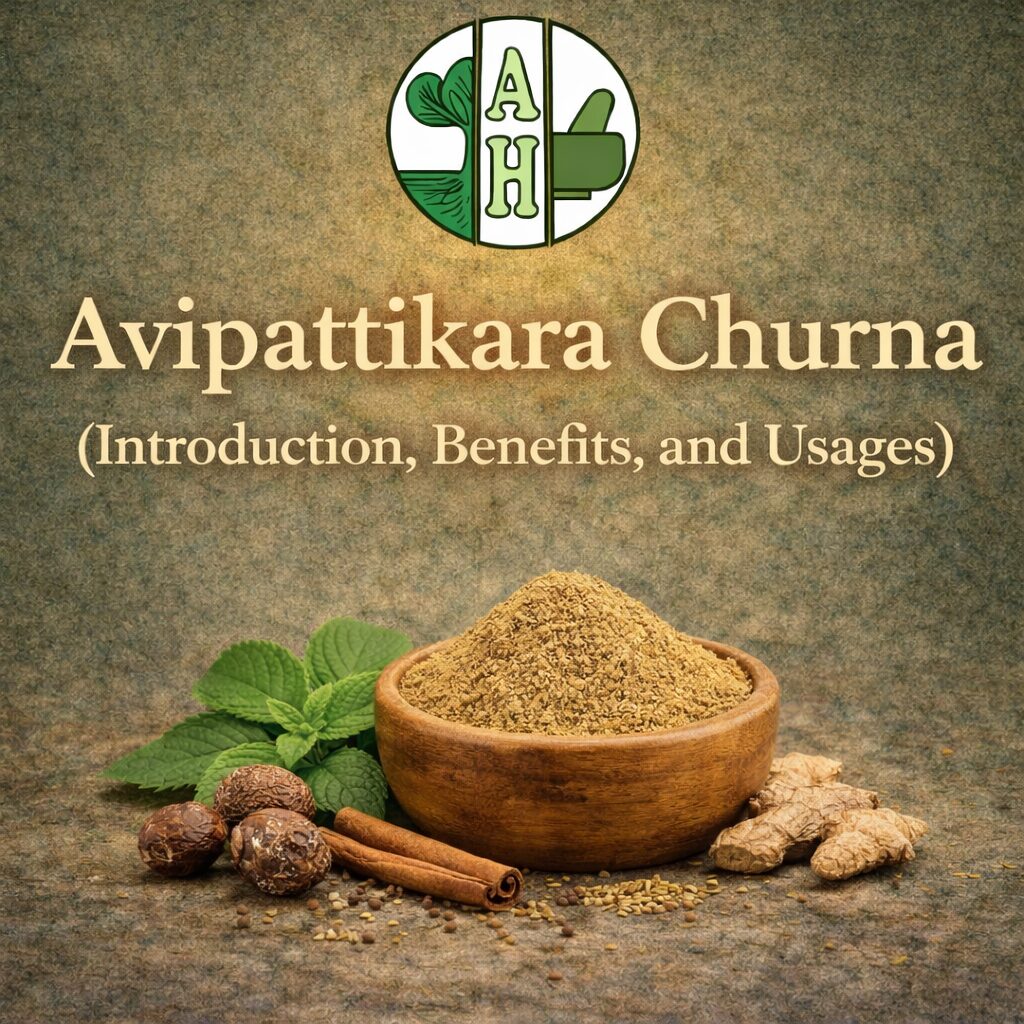
Avipattikara Churna (Introduction, Benefits, and Usages)
There’s a gentle magic in the ritual of Ayurveda — a lived wisdom that sees each digestive sigh, each pang of discomfort, as a signal from our inner fire (agni). Long before the age of quick fixes and antacids, our ancestors crafted nuanced herbal blends to soothe these signals with deep understanding and reverence. Among these time‑honoured formulas is Avipattikara Churna — a powder that has cradled countless tummies back into balance across generations. It isn’t just a remedy; it’s a story of symphony in herbs, each ingredient singing in harmony to calm the inner storms of acid, heat, and imbalance.
Whether it’s that lingering acidity after a heavy meal, the discomfort of irregular bowels, or simply the unrest that comes from imbalanced Pitta (the fiery principled within Ayurvedic physiology), Avipattikara Churna steps in like a trusted friend — cooling, grounding, and deeply digestive. In the modern world, where processed foods, stress, and sedentary rhythms challenge our inner balance, this age‑old powder feels remarkably timely — a whisper from tradition that good digestion is at the heart of radiant health.
What Is Avipattikara Churna?
Unlike a single herb, Avipattikara Churna is a classical polyherbal formulation — a blend of several powerful herbs and spices, each chosen for its digestive and Pitta‑balancing qualities. In Sanskrit, “Avipattikara” roughly translates to “that which removes troubles,” especially those arising from excess heat and aggravated gastric acid.
It comes in fine powdered form (churna), traditionally prepared by drying and grinding a specific combination of herbs like Amalaki (Indian gooseberry), Haritaki, Bibhitaki, Pippali (long pepper), Kalimirch (black pepper), ginger, cardamom, and more. This blend is both comforting and potent, aromatic yet deeply functional.
Avipattikara Churna in History and Culture
The roots of Avipattikara Churna stretch deep into Ayurvedic literature and clinical tradition. Classical Ayurvedic formularies such as Bhaishajya Ratnavali and Bhavaprakasha Nighantu include references to this formulation, underscoring its long‑standing place in the Ayurvedic approach to digestive harmony and Pitta disorders. Its use predates modern digestive concerns, forming part of ritual and seasonal health practices throughout the Indian subcontinent.
Historically, this churna also made its way into the daily medicines of royal households and monastic communities, where balanced digestion was seen as foundational to meditation, vitality, and longevity. Its classical use spans from soothing heartburn to gently regulating bowel movements, a testament to Ayurveda’s holistic embrace of digestive well‑being.
Ayurvedic Properties
In Ayurvedic terms, Avipattikara Churna is primarily Madhura‑ (sweet), Tikta‑ (bitter) and Katu‑rasa (pungent in taste), with a cooling (Sheeta) virya (potency) and a sweet post‑digestive effect (Vipaka). It balances aggravated Pitta dosha, pacifies Vata, and supports stable Kapha when digestion is compromised. Its key karmas (actions) include Deepana (stimulating digestive fire), Pachana (digesting Ama/toxins), Rechana (mild laxative), and Pitta‑shamana (soothing excess heat).
Active Compounds and Modern Research
The blend’s effectiveness isn’t just traditional lore — modern studies have begun to explore its biochemical footprint. Ingredients like Pippali and Kalimirch contain piperine, a bioactive compound known to enhance digestive enzyme activity and improve nutrient absorption. A 2019 HPTLC study even quantified piperine in classical Ayurvedic churnas including Avipattikara, reinforcing the importance of standardization and quality control in these formulations.
Another peer‑reviewed study evaluated the anti‑secretory and anti‑ulcerogenic properties of Avipattikar Churna in experimental rats, suggesting its potential for reducing gastric acid secretion and protecting gastric mucosa — a promising pointer to its traditional use for hyperacidity and peptic discomfort.
Benefits of Avipattikara Churna
Supports Healthy Digestion
One of the most celebrated roles of Avipattikara Churna is its capacity to kindle the digestive fire (Agni). In Ayurveda, when Agni weakens, food isn’t fully digested, leading to Ama (toxic byproducts) that clog the channels and invite discomfort. This churna’s combination of pungent and aromatic herbs stimulates digestive enzymes, supports proper assimilation, and gently clears digestive stagnation, leaving the system light and responsive.
Balances Excess Pitta and Reduces Acidity
Modern lifestyles often send Pitta out of balance — spicy foods, stress, and erratic eating can accelerate gastric heat and acid. Avipattikara Churna offers a cooling, soothing influence, reducing burning sensations and creating harmonized gastric rhythms. Traditional texts describe its Pitta‑shamana effect, and even contemporary interpretations acknowledge its role in managing hyperacidity symptoms.
Alleviates Constipation and Promotes Regularity
A gentle Rechana (laxative) action makes this churna particularly valuable for mild to moderate constipation. When Vata becomes aggravated, the colon dries out and stools become hardened. Avipattikara Churna’s balanced herbal synergy restores rhythmic bowel movements without harsh stimulation, nurturing smooth elimination.
Soothes Irritable Bowel Sensations
For people with erratic bowel habits — alternating between loose and firm stools — this formula provides calming and regulating support. By soothing digestive spasms and balancing doshas in the gut, it helps create steadiness in bowel patterns, a core Ayurvedic perspective on Grahani (digestive imbalance).
Enhances Appetite and Assimilation
Loss of appetite can stem from weak digestive fire and the accumulation of Ama. Avipattikara Churna clears digestive stagnation, kindles metabolism, and readies the gut to receive nourishment. Users often report a renewed hunger and comfort with eating, reflecting both Ayurvedic doctrine and the biochemistry of its pungent constituents.
Supports Weight Management through Digestion
Though not a weight‑loss herb per se, healthy digestion is a cornerstone of metabolic balance. By alleviating bloating, acidity, and sluggish processing of food, Avipattikara Churna indirectly supports those on a journey toward balanced weight through improved digestion and nutrient uptake.
May Help with Piles and Related Discomfort
Chronic constipation and impaired elimination can lead to strain and inflammation around the anal region, identified in Ayurveda as Arsha (piles). By encouraging regular, smooth bowel movements and cooling inflamed tissues, this churna can be a supportive ally alongside lifestyle and dietary care.
Classical Ayurvedic Formulations
Avipattikara Churna itself is a classical formulation. Other traditional preparations that share similar digestive and Pitta‑pacifying qualities include:
- Pippali Churna — a simple powdered long pepper blend used to kindle digestive fire.
- Trikatu Churna — a hot digestive trio of Pippali, black pepper, and dried ginger.
- Hingvastaka Churna — a spice blend that calms bloating and gas.
Each of these has nuanced applications but, like Avipattikar, centres the gut’s harmony as foundational to overall health.
How to Use Avipattikara Churna
As a Churna (Powder Form)
Take 2–3 grams (about ½–¾ teaspoon) of Avipattikara Churna twice daily after meals, with warm water, buttermilk, or Jeerakashaad (cumin water). This helps soothe digestion after heavier meals and promotes regular elimination.
With Buttermilk
For deeper Pitta pacification on hot days or with spicy food, mix the churna in 100–150 ml of fresh buttermilk. The dairy’s cool quality complements the churna’s digestive action.
At Bedtime for Constipation
When bowel inertia is a concern, 3–4 grams before bed with lukewarm water can help support overnight elimination rhythms.
As a Digestive Kick Before Meals
If appetite is low, 1–2 grams about 30 minutes before a meal with warm water can help kindle Agni and readies the digestive tract for nourishment.
With Honey or Ghee (Optional)
For sensitive stomachs, a pinch of honey or ghee can soften the churna’s impact and add a soothing, lubricating element to the gut walls. Consult an Ayurvedic practitioner for personalized ratios.
Dosage and Safety
For most adults, 2–4 grams daily is standard, divided between meals or taken as advised by a qualified Ayurvedic clinician. While generally well‑tolerated, those who are pregnant, breastfeeding, or on medication should consult a practitioner before use. Because classical Ayurvedic powders can vary in strength, professional guidance ensures safe, personalized application.
Shop Section
If you are looking to bring the healing power of Avipattikara Churna into your daily wellness routine, Ayurvedaholic is your trusted destination for authentic Ayurvedic products. The platform carries a wide range of products from India’s most reputable Ayurvedic brands including Patanjali, Dabur, Baidyanath, and Kottakkal.
👉 Shop All Ayurvedic Products — Ayurvedaholic
There’s a special kind of satisfaction in returning to the wisdom that our bodies have spoken through for millennia. Avipattikara Churna invites us to slow down, listen to our digestion, and nurture it with intention — a small but profound act of self‑care in a world that often rushes past the very signals that keep us well.
Disclaimer
The information in this article is for educational purposes only and does not constitute medical advice, diagnosis, or treatment. Always consult a qualified Ayurvedic practitioner or healthcare professional before using any herb or formulation, especially if you are pregnant, breastfeeding, or on medication. Individual results may vary. Ayurvedaholic does not claim to diagnose, treat, cure, or prevent any disease.
References
- Charaka Samhita, Sutra Sthana, Chapter 26
- Bhavaprakasha Nighantu, Haritakyadi Varga
- Bhaishajya Ratnavali, Volume 2, Vatavyadhi Chikitsa — View on Internet Archive
- Hazra AK et al. — “A rapid HPTLC method to estimate piperine in Ayurvedic formulations.” J Ayurveda Integr Med, 2019 — View on PubMed
- Gyawali S et al. — “Evaluation of anti-secretory and anti-ulcerogenic activities of Avipattikar Churna.” J Clin Diagn Res, 2013 — View on PubMed

Add comment