
Harad (Introduction, Benefits, and Usages)
Harad benefits encompass digestive health, antioxidant protection, cognitive function, and anti-inflammatory action — making Terminalia chebula (Harad, Haritaki) one of the most revered and widely researched herbs in Ayurveda. It’s the first of the three fruits in Triphala, considered in Ayurveda as the “King of Medicines” (Abhaya — fearless, because it removes disease without causing harm), and one of the few herbs described as beneficial for all seven Dhatus (body tissues). See Wikipedia: Terminalia chebula. For related Triphala herbs, explore Triphala and Bibhitaki.
What Is Harad? A Complete Introduction
Origin and History of Harad
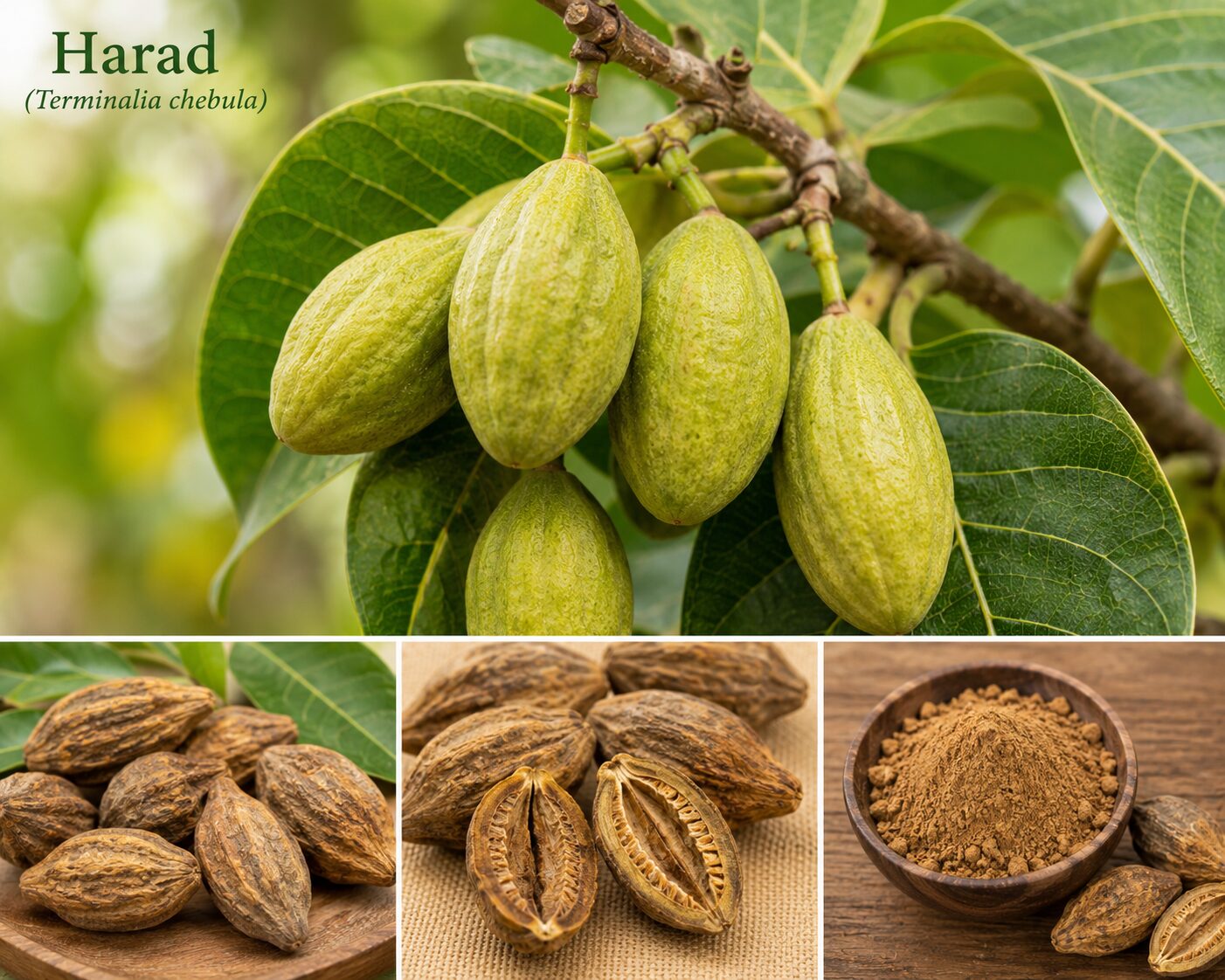
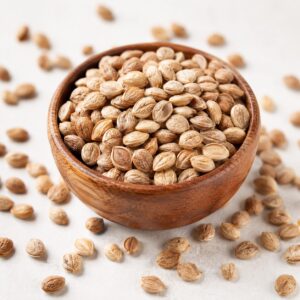
Harad (Terminalia chebula, also called Haritaki in Sanskrit) is a large deciduous tree native to the Indian subcontinent and Southeast Asia, growing across the Himalayan foothills from Pakistan to southwest China. The fruit — a small, ribbed drupe resembling an olive — has been used medicinally for at least 3,000 years. The Charaka Samhita devotes extensive chapters to Haritaki, describing it as Abhaya (fearless) because it removes disease without fear of causing harm. Tibetan medicine considers Haritaki so important that the Medicine Buddha is depicted holding it in his right hand. In Tibetan, Ayurvedic, and traditional Chinese medicine, Haritaki/He Zi is considered one of the most complete and beneficial medicines in existence.
Key Compounds and Nutritional Profile
Harad contains exceptional concentrations of hydrolysable tannins — particularly chebulic acid, chebulinic acid, chebulagic acid, corilagin, punicalagin, and ellagic acid. These tannins are responsible for the strong astringent action and most of the antimicrobial, antioxidant, and anti-inflammatory effects. Gallic acid in Harad is particularly potent — antioxidant, antimicrobial, and with documented anticancer and neuroprotective effects. Anthraquinone glycosides (sennoside-like compounds) provide the mild laxative action that makes Harad a gentle but effective digestive cleanser. Vitamins (B1, B2, B3, C), amino acids, and various phenolic compounds complete the phytochemical profile. See Wikipedia: Ellagic acid.
Top Health Benefits of Harad
Harad Benefits for Digestive Health and Overall Wellbeing
Harad’s digestive benefits are its most historically consistent and clinically supported applications. The chebulic acid and anthraquinone content provides gentle laxative action for constipation while the tannins paradoxically treat diarrhoea through astringent intestinal tightening — this dual action (Anulomana — regulating bowel movement in the correct direction) is a key Ayurvedic property. Harad stimulates bile secretion, improving fat digestion. The ellagitannins have documented H. pylori inhibiting activity, relevant for gastric ulcer prevention. Clinical studies confirm Harad extract significantly reduces constipation, bloating, and irritable bowel symptoms.
Harad’s antioxidant activity is exceptionally high — ORAC scores rival blueberries, and the chebulinic acid-ellagic acid combination provides broad spectrum radical scavenging protecting cellular DNA, lipids, and proteins from oxidative damage.
Harad for Skin, Hair, and Beauty
Harad is one of Ayurveda’s most important herbs for skin and hair. The tannins (particularly chebulagic acid) have documented antimicrobial activity against skin pathogens including Staphylococcus aureus and Candida species relevant to skin infections. For hair, Harad oil or water infusion is used as a traditional scalp treatment — the tannins strengthen hair follicles, reduce dandruff through antifungal activity, and the antioxidant compounds protect follicles from oxidative damage. Triphala churna (which contains Harad as a primary ingredient) is the most commonly recommended Ayurvedic internal preparation for healthy skin and hair.
Medicinal Properties of Harad
How Harad Works as a Natural Remedy
Harad’s digestive mechanism involves anthraquinone glycosides stimulating peristalsis and water secretion into the colon (gentle laxative), while tannins simultaneously tighten mucosal tissue and reduce inflammatory secretions (antidiarrhoeal) — the net effect is normalisation of bowel movement, whether from constipation or diarrhoea. The antimicrobial mechanism involves ellagitannins and gallic acid disrupting bacterial and fungal cell membranes, inhibiting bacterial adhesion, and having direct antiviral activity against multiple respiratory viruses. The antioxidant mechanism is primarily radical scavenging and metal ion chelation — removing the oxidative triggers rather than just quenching the radicals after they form.
Harad in Ayurveda and Traditional Medicine
In Ayurveda, Haritaki contains all five tastes except salty (sweet, sour, pungent, bitter, astringent) — a very unusual nutritional completeness. It reduces all three Doshas but is particularly Vata-reducing. Classical uses include Virechana (purgation treatment), Rasayana (rejuvenation), Medhya (cognitive enhancement), Chakshushya (eye health), Varnya (complexion enhancing), and Hridya (cardiac tonic). The Charaka Samhita prescribes different preparation methods of Harad for different Doshas — with rock salt for Vata, with sugar for Pitta, with honey for Kapha, reflecting its adaptogenic action based on preparation. As part of Triphala, it’s one of the most prescribed herbs in contemporary Ayurvedic practice.
How to Use Harad — Practical Usages
Harad in Food, Tea, and Cooking
Harad churna (powder): 1–3g with warm water before bed is the most common Ayurvedic use for constipation and bowel regulation. With rock salt for Vata-type constipation with bloating; with honey for Kapha-type sluggish digestion. Harad decoction: boil 5–10g of dried Harad in 400ml water, reduce to 100ml, strain and drink for acute digestive conditions. Mouth rinse and gargle: Harad decoction gargled for gum disease, mouth ulcers, and sore throat — the astringent tannins reduce gum inflammation and inhibit oral bacteria.
Harad as a Supplement or Topical Application
Harad extract capsules (standardised to tannin content) are available as supplements for antioxidant, digestive, and antimicrobial applications. As part of Triphala — the most convenient and clinically studied form — 500 mg to 1g twice daily provides Harad alongside Amla and Bibhitaki in classical proportions. For topical skin and hair applications, Harad powder mixed with honey or Harad infusion in oil provides antimicrobial, astringent, and antioxidant topical benefit for skin conditions, wound care, and scalp health.
Side Effects and Precautions of Harad
- Laxative effect: doses above 5g may cause loose stools or diarrhoea — start with lower doses and titrate up
- Pregnancy: traditionally avoided during pregnancy due to purgative effects and uterine-stimulating potential — avoid except under qualified guidance
- Nutritional absorption: the high tannin content may reduce iron, zinc, and other mineral absorption from a concurrent meal — take separately from main meals or at bedtime
- Dehydration: laxative use increases fluid loss — ensure adequate hydration when using Harad for constipation
Frequently Asked Questions About Harad
What are the main Harad benefits for health?
Key Harad benefits: digestive regulation (constipation and diarrhoea through Anulomana action), exceptional antioxidant protection from ellagitannins and gallic acid, broad-spectrum antimicrobial activity against bacteria, fungi, and viruses, gastric H. pylori inhibition for ulcer prevention, cognitive enhancement as a Medhya Rasayana, eye health as Chakshushya, skin brightening as Varnya, cardiovascular protection as Hridya, and comprehensive Rasayana rejuvenation benefit as one of the most complete medicinal plants in Ayurveda.
What is the difference between Harad and Haritaki?
Harad and Haritaki refer to the same plant — Terminalia chebula. Haritaki is the Sanskrit name, used in classical Ayurvedic texts. Harad (or Harar) is the common Hindi/vernacular name. Both refer to the dried fruit of the same tree. In Tamil, it’s Kadukkai; in Marathi, Hirda; in Bengali, Haritaki. The medicine is the same regardless of the regional name.
Can Harad help with constipation?
Yes — Harad is one of Ayurveda’s most effective and gentle laxative herbs. The anthraquinone glycosides stimulate peristalsis and increase water secretion into the colon, softening stool and promoting bowel movement. Take 1–3g Harad churna with warm water at bedtime — bowel movement typically follows the next morning. Unlike harsh laxatives, Harad’s tannin content simultaneously protects the intestinal mucosa from irritation. The bowel-regulating effect (not just laxative) means it can also help with loose stools through the astringent tannin action.
How to use Harad in Ayurveda for different seasons?
The classical Ayurvedic approach to Harad changes seasonally: in summer (Grishma), take with jaggery for cooling; in monsoon (Varsha), with rock salt and ghee for Vata-Kapha balance; in autumn (Sharad), with sugar for Pitta reduction; in early winter (Hemanta), with dry ginger for warmth; in late winter (Shishira), with Pippali for digestive stimulation; in spring (Vasanta), with honey for Kapha reduction. This seasonal rotation optimises Harad’s benefits for the changing Doshic environment throughout the year.
Is Harad good for eye health?
Ayurveda classifies Haritaki as Chakshushya — specifically beneficial for the eyes. Modern research supports this: the gallic acid and ellagic acid in Harad have documented inhibitory effects on cataract formation through aldose reductase inhibition (the enzyme that converts glucose to sorbitol in the lens — a key mechanism in diabetic cataract development). The antioxidant compounds protect retinal cells from oxidative damage. Traditional Ayurvedic eye washes using Harad decoction have some antimicrobial rationale through the tannin content.
Harad benefits explain why the Medicine Buddha holds it in his hand — it’s the closest thing to a complete medicine in the Ayurvedic pharmacopoeia. Start with Triphala (which contains Harad as a primary ingredient) for daily digestive and antioxidant support. Use Harad churna specifically for constipation and bowel regulation. Consider the decoction as a mouth rinse for gum health and sore throat. This is a foundational Ayurvedic herb that belongs in every serious natural medicine toolkit.

Add comment