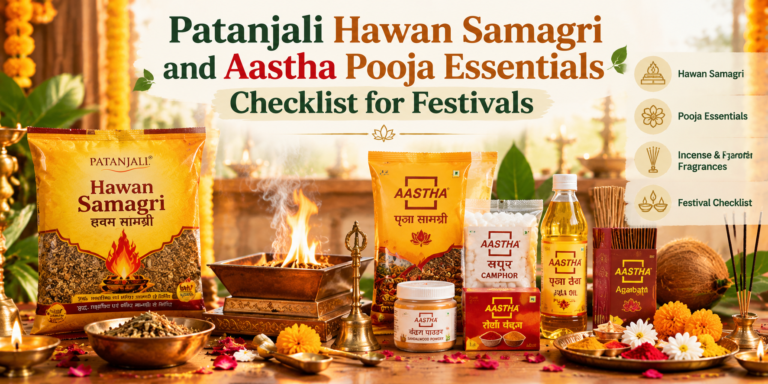

Hawan, also known as Havan, is a traditional Hindu ritual in which selected offerings are placed into a sacred fire while mantras are recited. It is performed during pujas, festivals, weddings, housewarming ceremonies and other religious occasions. For many families, hawan is a way to express devotion, offer prayers and create a spiritually meaningful atmosphere at home.
If you are planning to perform hawan for the first time, you may wonder which items are needed, how to arrange the samagri and what steps to follow. Preparing everything in advance can make the ritual more organised and help you avoid interruptions once the ceremony begins.
A hawan kit can be useful because it brings together several commonly used ritual items in one package. However, the contents of each kit can vary, so it is important to check what is included before purchasing.
This guide explains what hawan is, the commonly required samagri, how to perform a simple hawan at home, important fire-safety precautions and how to choose a suitable kit.
What Is Hawan?
Hawan is a traditional Vedic ritual in which offerings are made into a consecrated fire, usually while chanting prescribed mantras. The fire is treated as an important element of the ceremony, and the offerings form part of the ritual’s symbolic and devotional practice.
The terms hawan and havan are commonly used for this ritual. Depending on the occasion and tradition, a ceremony may be simple and brief or follow a more elaborate sequence guided by a priest.
Why do people perform hawan?
Families perform hawan for different religious and cultural reasons, including:
- Puja and festivals: As part of worship on auspicious occasions.
- Housewarming ceremonies: To mark the beginning of life in a new home.
- Family ceremonies: During weddings, anniversaries and other significant events.
- Traditional observances: Following the practices and mantras of a particular family or religious tradition.
- Personal devotion: As a way to participate in a familiar spiritual practice at home.
The exact procedure and the mantras used may differ between traditions. A simple home hawan should therefore follow the instructions appropriate to the occasion rather than attempting to reproduce every element of a larger ceremony.
Can you perform hawan at home?
Yes, a simple hawan can be performed at home when the space, equipment and circumstances are suitable. The most important considerations are understanding the basic ritual steps, preparing the required items and managing the fire safely.
If you are performing a specific ceremony, such as a traditional wedding ritual or a specialised religious observance, consult a knowledgeable priest about the appropriate procedure and offerings.
Hawan Samagri List: What Do You Need?
Before beginning a hawan, prepare the required items in one place. The exact samagri depends on the occasion, the mantras being recited and the family’s religious tradition.
For a simple home hawan, the following list can help you get organised.
| Item | Purpose in the ritual |
|---|---|
| Hawan Kund | Holds the ritual fire |
| Hawan Stand | Provides support for the kund, if designed for that purpose |
| Hawan Samagri | Traditional mixture used for offerings |
| Samidha (suitable dry wood) | Used as fuel according to the ritual |
| Ghee | Used for offerings as prescribed by the tradition |
| Havan spoon | Helps make offerings into the kund |
| Lota with water | Used for ritual water offerings and other prescribed steps |
| Diya and suitable lighting material | Used for the lighting portion of the ceremony |
| Small plates and glasses | Help organise the ritual materials |
| Cotton cloth and matches or a lighter | Useful for preparation and lighting, with appropriate care |
| Flowers, rice and other puja items | Included when required by the particular puja |
You may not need every item for every ceremony. Follow the instructions for your particular ritual rather than treating this list as a mandatory set of offerings.
What is hawan samagri?
Hawan samagri is a mixture of materials traditionally offered into the sacred fire. Depending on the preparation, it may contain herbs, plant materials, seeds and aromatic ingredients.
Its composition can vary by manufacturer and ritual tradition. Read the package information and avoid adding unknown substances, plastics, synthetic fragrances or materials that are not intended to be burned.
Does a hawan kit include the samagri?
Not necessarily. This is an important distinction when shopping.
The Patanjali Aastha Hawan Kit listing on Ayurvedaholic describes a set of ritual accessories, including a Hawan Kund, stand, plates, lota, diya, spoons and glasses. It should not be assumed to include consumable hawan samagri, ghee or wood unless the selected pack explicitly lists those items.
Check the product description before ordering so you know which additional materials you need to arrange.
How to Perform Hawan at Home: Step-by-Step Guide
The following is a general guide for a simple home hawan. The exact mantras, offerings and sequence may differ by tradition, so follow your family’s practice or the guidance of a knowledgeable priest.
Step 1: Choose a suitable location
Select a stable, uncluttered location where a small ritual fire can be managed safely. Prefer a suitable outdoor area where permitted. If a ceremony is conducted indoors, adequate ventilation and a safe, purpose-built arrangement are essential.
Keep the kund away from curtains, paper, wooden furniture, decorations, electrical wiring, gas cylinders and other combustible materials. Do not perform a fire ritual in a cramped or poorly ventilated room.
Step 2: Arrange the hawan kund and accessories
Place the Hawan Kund on a stable, non-combustible, heat-resistant surface. If using a stand, ensure that it is designed for the kund and sits securely.
Arrange the plates, spoons, lota, diya and other accessories so that everything is within easy reach without placing combustible materials near the fire.
Keep children and pets at a safe distance throughout the ceremony.
Step 3: Prepare the samagri
Place the required hawan samagri in a clean, dry container. Keep the ghee and other prescribed offerings nearby, but away from the flame.
Check that any wood being used is dry and suitable for the ritual. Do not use painted, treated or chemically coated wood, or household waste, as fuel.
If you are following a specific puja procedure, confirm which offerings are required and in what order.
Step 4: Begin with prayer and the prescribed invocation
Once everything is ready, begin with the prayers and invocations appropriate to your tradition. Some ceremonies include a short prayer to Lord Ganesha, a sankalp (statement of intention) and other prescribed rituals before the fire is lit.
The exact sequence is not identical across all Hindu traditions. If you are unfamiliar with the ceremony, a priest or trusted religious guide can help you follow the appropriate mantras.
Step 5: Light the fire carefully
Use only a small, controlled flame appropriate for the kund. Follow the ritual’s instructions and avoid using petrol, kerosene, alcohol or other accelerants.
Never pour ghee or other liquids directly from a large container into an open flame. Add only small, prescribed offerings using a suitable spoon, and do not lean over the fire.
If the flame becomes too large, stop adding fuel and follow a safe fire-control procedure. Never leave the burning kund unattended.
Step 6: Offer samagri while reciting mantras
During the main part of the ritual, offerings are made according to the mantras and instructions for the ceremony. A common practice is to make an offering at the prescribed point in the chant, sometimes accompanied by the word Swaha.
Use the appropriate spoon and small quantities of samagri. Avoid throwing large handfuls of material into the fire, as this can cause sudden flare-ups and excessive smoke.
There is no need to improvise additional offerings. Follow the sequence appropriate to your particular hawan.
Step 7: Complete the prayer and close the ceremony
Complete the prescribed mantras and closing prayers for your tradition. Some ceremonies include a final offering or a prayer for wellbeing and gratitude.
Allow the fire to die down safely. Do not leave the location simply because the main chanting has ended.
Step 8: Let the kund cool completely
Once the ceremony is over, ensure that the fire and embers are fully extinguished. Follow an appropriate fire-safe method and check that no embers remain before leaving the area.
Do not touch, clean or store the kund while it is hot. Dispose of the cooled ash responsibly and in accordance with local guidance; do not place warm ash in plastic or combustible waste containers.
Hawan Safety Tips You Should Never Ignore
Hawan is a religious practice, but it also involves an open flame and smoke. A few precautions can help reduce avoidable risks.
Ensure adequate ventilation
Burning wood, ghee and other materials can release smoke, fine particles and potentially harmful gases, including carbon monoxide. Natural ingredients do not make smoke automatically safe to inhale.
Avoid performing hawan in a closed room. Choose a suitable outdoor location where permitted, or ensure that any indoor arrangement has adequate ventilation and is appropriate for the space.
People with asthma or other respiratory conditions, young children and older adults may be more vulnerable to smoke. They should avoid exposure where possible.
Keep fire-control equipment nearby
Before lighting the fire, ensure you have a suitable way to respond to an emergency. The correct method depends on the fuel and fire circumstances.
Keep combustible items away from the kund, never leave the fire unattended, and ensure that everyone present knows how to move away safely if the flame becomes uncontrolled.
Do not disable smoke alarms or other fire-safety equipment to conduct a ritual.
Use only appropriate offerings
Use materials intended for hawan and prescribed by your tradition. Never burn plastic, synthetic fabric, painted wood, packaging or household waste.
Adding excessive quantities of ghee or samagri can cause flare-ups and additional smoke. Small, controlled offerings are preferable to overloading the kund.
Be mindful of children and pets
Place the kund in a location that children and pets cannot easily approach. Keep matches, lighters, ghee containers and other ritual materials out of their reach.
An adult should remain responsible for the fire from the beginning until the embers have been safely extinguished.
Follow local rules and building restrictions
Some residential buildings and housing societies restrict the use of open flames. Check applicable building rules and local fire-safety requirements before planning an indoor ceremony.
If the space is unsuitable for a real fire, consider a non-flame devotional alternative rather than risking a fire or exposing others to smoke.
How to Choose the Right Hawan Kit
A suitable hawan kit should make ritual preparation more convenient while providing the accessories required for your intended ceremony.
Check the contents
Look for the items you actually need, such as a Hawan Kund, stand, plates, lota, diya, spoons and glasses.
Do not assume that every kit includes hawan samagri, ghee, wood or other consumables. Compare the listed contents with your preparation checklist before ordering.
Consider the material and construction
The kund and its stand should be appropriate for ritual fire use, stable and suitable for the intended setting. Check the product description for material, dimensions and care instructions.
Do not rely solely on appearance or a product’s name to judge whether it is appropriate for a real flame.
Check the quantity and packaging
Review the number of accessories supplied and whether the kit meets your household’s requirements. If you are buying for a larger ceremony, confirm that the included items are sufficient for your planned arrangement.
Choose a kit that suits your ritual
A family performing occasional hawan may prefer a convenient set of reusable accessories. Someone following a more elaborate ceremony may need additional items prescribed by their priest.
The right choice depends on your ritual requirements, available space and how the kit will be stored and maintained.
Patanjali Aastha Hawan Kit on Ayurvedaholic

Patanjali Aastha Hawan Kit
Hawan accessories for traditional puja and fire rituals
₹2,080
Listed MRP: ₹2,300
The product listing describes a set of hawan accessories, including a kund, stand, plates, lota, diya, spoons and glasses.
Price shown on Ayurvedaholic when checked. Verify current price, availability and exact pack contents before ordering.
View Patanjali Aastha Hawan Kit on Ayurvedaholic
If you also need consumable offerings, check the available Patanjali Aastha Hawan Samagri on Ayurvedaholic. Confirm the selected product’s exact name, size and contents before purchasing.
Frequently Asked Questions
1. What items are required for hawan at home?
Common items include a Hawan Kund, suitable stand or heat-resistant surface, hawan samagri, prescribed fuel, ghee, a spoon, water vessel and other puja accessories. The exact requirements depend on the ritual.
2. Can beginners perform hawan at home?
A simple hawan may be performed by beginners who understand the basic procedure and can manage the fire safely. For specialised ceremonies or unfamiliar mantras, seek guidance from a knowledgeable priest.
3. Does Patanjali Aastha Hawan Kit include hawan samagri?
The Ayurvedaholic listing focuses on reusable hawan accessories. Do not assume that consumable samagri is included unless it is specifically listed in the selected pack.
4. Can hawan be performed indoors?
An indoor hawan presents fire and smoke risks. Do not conduct it in a closed or poorly ventilated room. Use only a suitable location with appropriate ventilation, fire precautions and permission under applicable building rules.
5. How do I extinguish the fire after hawan?
Follow an appropriate fire-safe method for the kund and fuel used. Ensure the flames and embers are completely extinguished before leaving, and allow the kund to cool fully before cleaning or storage.
6. How do I choose a genuine hawan kit?
Check the product name, manufacturer information, listed accessories, packaging and seller details. Retain your invoice and inspect the kit on arrival. A product listing is useful for reviewing the contents but does not independently guarantee suitability for every ritual or setting.
Conclusion
Performing hawan at home can be a meaningful way to continue a family or religious tradition. With the right preparation, a clear understanding of the ritual and appropriate fire-safety measures, you can organise the ceremony without unnecessary confusion.
Start by preparing the samagri list, arranging the kund and accessories, and following the mantras and sequence appropriate to your tradition. Remember that the exact procedure can vary, and a knowledgeable priest can guide you through specialised rituals.
If you need a ready set of reusable accessories, review the Patanjali Aastha Hawan Kit on Ayurvedaholic. Check the listed contents and current price before ordering, and arrange any consumable samagri separately if required.
Above all, treat fire safety as part of your preparation. Keep the space suitable, avoid excessive smoke, supervise the flame continuously and ensure that all embers are extinguished before leaving.