
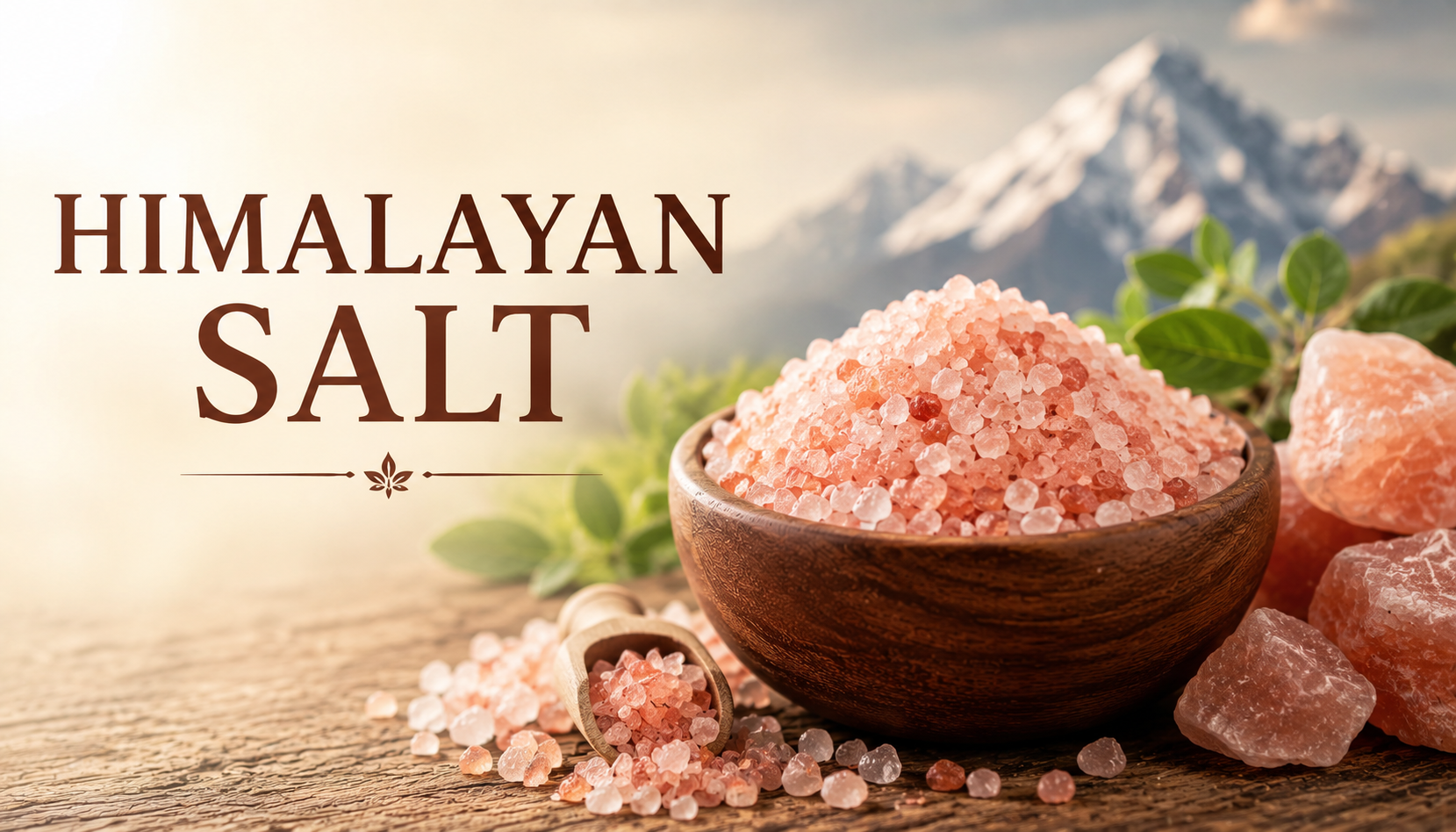
Himalayan Salt (Introduction, Benefits, and Usages)
Himalayan Salt benefits are often exaggerated in wellness marketing — but the reality is still genuinely interesting. This ancient mineral salt (Saindhava Lavana in Ayurveda) contains over 80 trace minerals, is considered the purest salt available, and Ayurveda has used it as a therapeutic medicine for over 3,000 years as Tridoshic, digestive, and electrolyte-balancing. The honest assessment: it’s a superior salt for general use, a well-evidenced Ayurvedic digestive medicine, and worth using in place of standard table salt — but it’s not a cure-all. See Wikipedia: Himalayan salt. For related Ayurvedic minerals, explore Shilajit and Lavan Bhaskar Churna.
What Is Himalayan Salt? A Complete Introduction
Origin and History of Himalayan Salt
Himalayan salt is mined primarily from the Khewra Salt Mine in Pakistan’s Punjab region — the world’s second-largest salt mine — at the foot of the Himalayan mountain range. This salt was formed approximately 250 million years ago from ancient sea beds that evaporated as tectonic activity created the Himalayan mountains. The resulting crystalline salt has been protected from modern environmental pollution by the surrounding rock strata, which is why it’s considered exceptionally pure. In Ayurveda, Saindhava Lavana (rock salt from the Sindh region) is described in the Charaka Samhita as the finest of all salts — Tridoshic (balancing all three Doshas), digestive, and therapeutic. It was traded along ancient Silk Road routes and has been used medicinally across Central and South Asia for millennia.
Key Compounds and Mineral Profile
Himalayan salt is primarily sodium chloride (approximately 98% by weight), with the remaining 2% comprising over 80 trace minerals including potassium, calcium, magnesium, iron (which gives the characteristic pink-to-red colour), manganese, zinc, copper, selenium, and many others. The iron oxide (Fe2O3) content provides the distinctive pink colour. While the trace mineral content is genuine, the amounts per typical serving are small — Himalayan salt provides meaningfully more potassium, calcium, and magnesium than table salt, but not dramatically so. The absence of anti-caking agents and the absence of iodisation are notable differences from commercial table salt. See Wikipedia: Sodium chloride.
Top Health Benefits of Himalayan Salt
Himalayan Salt Benefits for Digestion and Overall Health
The most legitimate and Ayurvedically validated benefit of Himalayan salt is digestive. Saindhava Lavana (Himalayan/rock salt) is classified in Ayurveda as Deepana (digestive stimulant) and Pachana (digestive) — it stimulates hydrochloric acid secretion in the stomach, improving protein digestion, activating digestive enzymes, and improving overall digestive efficiency. A common Ayurvedic practice: a pinch of Himalayan salt on the tongue before meals stimulates digestive secretions. Salt water (Sole) using Himalayan salt provides a structured electrolyte solution used for hydration, electrolyte balance, and digestive support.
The electrolyte benefits are real — sodium, potassium, and magnesium in Himalayan salt maintain fluid balance, nerve transmission, and muscle function. Proper electrolyte balance is fundamental to everything from cardiovascular function to athletic performance to sleep quality.
Himalayan Salt for Skin, Hair, and Beauty
Himalayan salt baths and scrubs are genuinely effective for skin health. Salt’s osmotic properties draw out impurities from skin pores, the magnesium in Himalayan salt improves skin barrier function (magnesium deficiency is associated with eczema and impaired skin barrier), and the mineral-rich brine has mild antimicrobial activity. Salt scrubs provide physical exfoliation removing dead skin cells while the mineral content is absorbed through skin. Himalayan salt lamps don’t have meaningful evidence for air purification (negative ion generation is negligible at room temperature) — this is one claim that doesn’t hold up to scrutiny.
Medicinal Properties of Himalayan Salt
How Himalayan Salt Works as a Natural Remedy
Himalayan salt’s digestive mechanism is through sodium’s role in stimulating parietal cell HCl secretion in the stomach — adequate salt intake is actually necessary for sufficient gastric acid production, and many people with digestive complaints are paradoxically low-salt or eating highly processed foods where sodium is in compounds that don’t stimulate gastric secretion effectively. The electrolyte balance mechanism involves sodium-potassium ATP pump function across cell membranes — this is fundamental to every cell in the body, controlling fluid balance, nerve impulse transmission, and muscle contraction. Mineral absorption through skin (balneotherapy) is well-established for magnesium and sulphate — Himalayan salt baths provide these minerals transdermally.
Himalayan Salt in Ayurveda and Traditional Medicine
In Ayurveda, Saindhava Lavana is uniquely classified as Tridoshic — balancing all three Doshas when used appropriately. All other salts are considered to aggravate at least one Dosha. It’s classified as Deepana (digestive stimulant), Pachana (digestive), Sramsana (mildly laxative), and Hridya (cardiac tonic). Classical Ayurvedic preparations using Saindhava include Lavan Bhaskar Churna (multi-salt digestive formulation), Hingwashtak Churna, and numerous other digestive formulations where it’s specified by name. Lavan Bhaskar Churna uses multiple salt varieties including Saindhava as its foundation for comprehensive digestive support.
How to Use Himalayan Salt — Practical Usages
Himalayan Salt in Food, Sole, and Cooking
Use Himalayan salt as your everyday cooking salt — it provides the same sodium as table salt but with trace minerals and without anti-caking agents. Sole water (concentrated Himalayan salt solution): fill a glass jar with Himalayan salt crystals, cover with water, seal, and leave overnight. The next morning the water is saturated with salt and minerals. Take 1 teaspoon of Sole in a glass of water each morning for electrolyte and digestive support — the traditional Ayurvedic-aligned practice of waking mineral hydration. A pinch of Himalayan salt before meals as an Ayurvedic digestive stimulant. Add to herbal teas for electrolyte enhancement.
Himalayan Salt as a Supplement or Topical Application
Himalayan salt bath: dissolve 1–2 cups of Himalayan salt in a warm bath. Soak for 20–30 minutes for skin health, relaxation, and transdermal mineral absorption (particularly magnesium). This is genuinely effective for skin conditions including eczema, psoriasis, and general dry skin. Salt scrub: mix Himalayan salt with a carrier oil (coconut or almond) and an essential oil of choice — apply to skin in circular motions for physical exfoliation and mineral application, then rinse. Neti pot: a saline nasal rinse with Himalayan salt solution is one of the most effective evidence-based treatments for nasal congestion, sinusitis, and allergic rhinitis.
Side Effects and Precautions of Himalayan Salt
- Hypertension and kidney disease: Himalayan salt has the same sodium content as table salt — people with hypertension, kidney disease, or heart failure who need to restrict sodium should still restrict Himalayan salt
- No iodine: Himalayan salt isn’t iodised — if Himalayan salt is your primary salt, ensure you get iodine from other sources (seaweed, seafood, dairy, iodised supplements) to prevent iodine deficiency
- Marketing claims: many purported benefits (negative ions from lamps, alkalising effects, detoxification) aren’t supported by meaningful evidence — use Himalayan salt for its genuine evidence-based benefits, not the inflated wellness claims
- Sole overdose: excessive Sole water consumption without adequate plain water intake can cause hypernatraemia (sodium overload) — use Sole as a supplement (1 tsp daily), not a replacement for water
Frequently Asked Questions About Himalayan Salt
What are the main Himalayan Salt benefits for health?
Genuine Himalayan Salt benefits: digestive stimulation through gastric acid secretion promotion (Ayurvedic Deepana property), electrolyte balance maintenance for hydration, nerve transmission and muscle function, trace mineral provision (over 80 minerals in small amounts), skin health through baths and scrubs (mineral absorption, exfoliation), nasal health through saline irrigation for sinusitis and allergic rhinitis, and quality salt free from anti-caking agents and processing additives.
Is Himalayan salt better than table salt?
For most purposes: marginally, but not dramatically. Himalayan salt’s advantages over table salt are: trace mineral content (over 80 minerals vs. essentially none in table salt), absence of anti-caking agents (some of which have dubious safety profiles), and Ayurvedic Tridoshic classification making it preferable in Ayurvedic protocols. The disadvantage: no iodine (table salt is iodised, helping prevent iodine deficiency globally). The honest conclusion: Himalayan salt is a better everyday cooking salt if you ensure iodine from other dietary sources.
What is Saindhava Lavana in Ayurveda?
Saindhava Lavana (literally “salt from the Sindhu/Indus region”) is the Ayurvedic name for Himalayan/rock salt, named after the ancient region where it was mined (corresponding to modern-day Pakistan’s salt range). It’s considered the finest salt in Ayurveda — the only Tridoshic salt, recommended as the salt of choice in all Ayurvedic dietary guidelines. It appears in the Charaka Samhita as digestive, cardiac tonic, and therapeutic for multiple conditions. Most Ayurvedic formulations specifying “Lavana” or salt mean Saindhava unless otherwise specified.
Does Himalayan salt help with digestion?
Yes — this is the most Ayurvedically grounded and pharmacologically plausible benefit. Sodium chloride stimulates gastric parietal cells to secrete hydrochloric acid, which is essential for protein digestion, mineral absorption, and preventing bacterial overgrowth in the upper gut. Many people with digestive complaints including bloating, indigestion, and GERD (paradoxically) have insufficient gastric acid. A pinch of Himalayan salt on the tongue before meals, or adding salt to warm lemon water each morning, is a practical digestive stimulant approach aligned with Ayurvedic Deepana principles.
How to make and use Himalayan salt Sole water?
To make Sole: fill a glass jar one-quarter full of Himalayan salt crystals (not ground). Cover with pure water (not chlorinated tap water if possible). Seal and leave overnight. The solution is ready when the salt crystals no longer dissolve (meaning the water is saturated, approximately 26%). Take 1 teaspoon of Sole in a large glass of plain water each morning on an empty stomach. This provides structured electrolytes for hydration, trace mineral provision, and digestive priming. Do not increase beyond 1 teaspoon — more isn’t better and can cause sodium excess.
Himalayan Salt benefits are genuine but deserve honest calibration. This is a superior everyday salt for cooking, an Ayurvedically validated digestive medicine, an effective bath and skincare mineral, and a reliable nasal saline for respiratory health. What it isn’t is a cure-all or a dramatic health transformer. Use it daily as your cooking salt, practice Sole water morning hydration, and take Himalayan salt baths for skin conditions — these are the applications with real substance behind them.


Add comment