
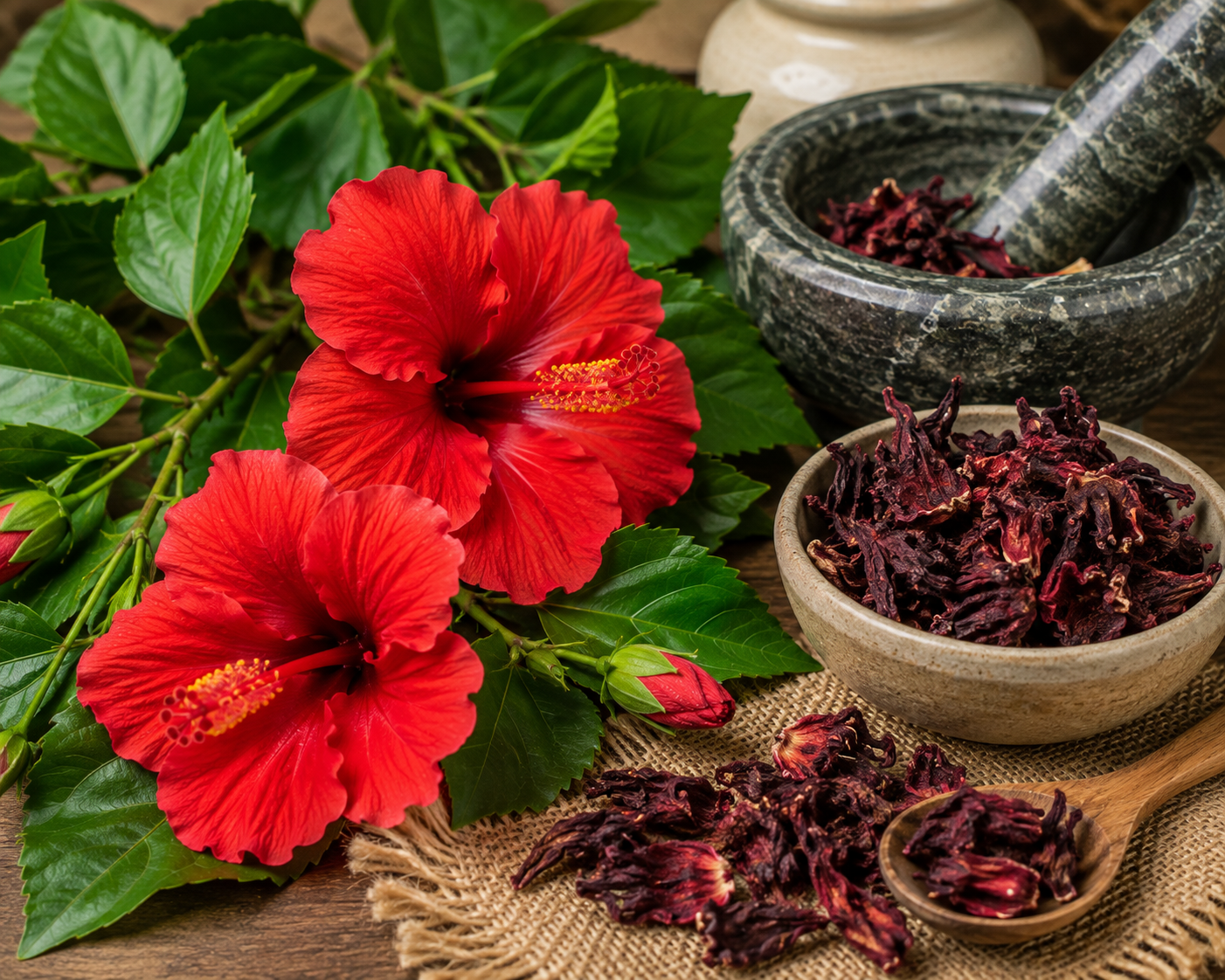
Hibiscus (Introduction, Benefits, and Usages)
Hibiscus benefits are backed by some of the strongest clinical evidence in herbal medicine — particularly for blood pressure reduction, where multiple randomised trials and meta-analyses confirm Hibiscus sabdariffa tea lowers both systolic and diastolic blood pressure comparably to pharmaceutical antihypertensives. The deep red calyces of Hibiscus sabdariffa are also exceptional sources of anthocyanins, vitamin C, and organic acids with documented cholesterol-lowering, liver-protective, and anti-inflammatory effects. See Wikipedia: Hibiscus sabdariffa. For related heart-protective herbs, explore Arjuna and Rose.
What Is Hibiscus? A Complete Introduction
Origin and History of Hibiscus
Hibiscus sabdariffa — the medicinal Hibiscus (Roselle, Gongura in Telugu, Mesta in Bengali) — is native to West Africa and is now cultivated throughout tropical and subtropical regions worldwide. It has been used medicinally in West Africa, the Caribbean, the Middle East, and South and Southeast Asia for centuries. In Ayurveda, Hibiscus (Japapushpa, particularly Hibiscus rosa-sinensis — the ornamental variety) is primarily used as a hair and uterine tonic. The calyx-based medicinal use of H. sabdariffa is particularly strong in Egyptian, Sudanese, and Mexican traditional medicine, where hibiscus tea (Karkade in Egypt, Agua de Jamaica in Mexico) is a traditional remedy for blood pressure and heart health.
Key Compounds and Nutritional Profile
The medicinal calyx of Hibiscus sabdariffa contains exceptional concentrations of anthocyanins — primarily delphinidin-3-sambubioside and cyanidin-3-sambubioside — responsible for the deep crimson colour and most of the antioxidant and anti-inflammatory activity. Hibiscus acid (hydroxycitric acid lactone) has documented ACE-inhibiting and diuretic effects contributing to blood pressure reduction. Chlorogenic acids, protocatechuic acid, and quercetin provide additional antioxidant and anti-inflammatory activity. The calyx is also rich in vitamin C, calcium, and various organic acids (citric, malic, tartaric) providing the characteristically tart flavour. See Wikipedia: Delphinidin.
Top Health Benefits of Hibiscus
Hibiscus Benefits for Heart Health and Overall Wellbeing
Hibiscus’s blood pressure-lowering effects are exceptionally well documented. A 2010 randomised trial in JAMA Internal Medicine found drinking 3 cups of Hibiscus tea daily for 6 weeks reduced systolic blood pressure by 7.2 mmHg compared to placebo — an effect comparable to first-line antihypertensive medication for mild hypertension. A meta-analysis of 5 randomised trials confirmed this pattern, finding Hibiscus significantly reduces both systolic and diastolic blood pressure. The mechanism involves ACE inhibition (like ACE inhibitor drugs), diuretic effects, and vasodilatory antioxidant effects on vascular endothelium.
For cholesterol, multiple clinical trials find Hibiscus tea significantly reduces total cholesterol, LDL cholesterol, and triglycerides while increasing HDL — a comprehensive lipid-improving effect. For liver health, Hibiscus anthocyanins have hepatoprotective effects documented in clinical studies on non-alcoholic fatty liver disease.
Hibiscus for Skin, Hair, and Beauty
Hibiscus is often called the “botox plant” in beauty circles — an exaggeration, but its AHA (alpha-hydroxy acid) content, particularly citric and malic acids, provides gentle exfoliation, improved skin texture, and reduced hyperpigmentation. The anthocyanins protect skin from UV-induced oxidative damage and reduce the inflammatory processes behind premature skin ageing. For hair, Hibiscus is one of Ayurveda’s most important hair care herbs — Hibiscus rosa-sinensis flower and leaf have documented ability to stimulate hair growth through IGF-1 pathway activation, condition hair cuticles through mucilage content, and reduce premature greying through antioxidant protection of melanocytes.
Medicinal Properties of Hibiscus
How Hibiscus Works as a Natural Remedy
Hibiscus’s blood pressure mechanism involves multiple pathways. Hibiscus acid (a hydroxycitric acid lactone) inhibits angiotensin-converting enzyme (ACE) — reducing angiotensin II formation and allowing blood vessel relaxation. Anthocyanins improve endothelial function by increasing nitric oxide bioavailability — directly relaxing vascular smooth muscle. The diuretic organic acids reduce fluid volume, contributing to blood pressure reduction through reduced cardiac preload. Anti-inflammatory effects on vascular endothelium reduce the chronic inflammation underlying hypertension. Together, these mechanisms provide a multi-target approach to blood pressure management comparable to but mechanistically different from pharmaceutical ACE inhibitors.
Hibiscus in Ayurveda and Traditional Medicine
In Ayurveda, Japapushpa (Hibiscus rosa-sinensis) is classified as sweet, astringent, and cooling, Pitta and Pitta-rakta (blood heat) reducing. Classical Ayurvedic applications include Shonita Sthapaka (haemostatic), Raktapitta (bleeding disorders), Pradara (excessive menstrual bleeding), and Keshya (hair tonic). Hibiscus oil prepared by infusing flowers in sesame or coconut oil is one of the most popular Ayurvedic hair oils for promoting hair growth, preventing premature greying, and conditioning hair. The flower’s Pitta-cooling properties align with its documented vasodilatory and anti-inflammatory effects on the cardiovascular system.
How to Use Hibiscus — Practical Usages
Hibiscus in Food, Tea, and Cooking
Hibiscus tea (Karkade/Agua de Jamaica): steep 1–2 tablespoons of dried Hibiscus sabdariffa calyces in 2 cups of boiling water for 5–10 minutes. The result is a deep crimson, tart, vitamin C-rich tea. Drink 2–3 cups daily for blood pressure management — the clinical trial used 3 cups of hibiscus tea daily. Can be drunk hot or cold. Sweeten with honey rather than sugar for better metabolic outcomes. Hibiscus calyces can also be made into jam, syrups, and sauces — though cooking reduces some anthocyanin content.
Hibiscus as a Supplement or Topical Application
Hibiscus extract capsules (standardised to anthocyanin content) are available for cardiovascular and antioxidant applications. For blood pressure: 450–500 mg of standardised Hibiscus extract is the supplement equivalent of the 3 cups daily used in trials. Hibiscus hair oil: infuse fresh or dried Hibiscus flowers (rosa-sinensis) in warm coconut or sesame oil for 2 hours, strain, and apply to scalp. Leave for 30–60 minutes before washing. Use 2–3 times weekly for hair growth stimulation. Hibiscus flower paste mixed with henna is a traditional Ayurvedic hair colouring and conditioning treatment.
Side Effects and Precautions of Hibiscus
- Blood pressure medication: Hibiscus has potent blood pressure-lowering effects — additive hypotension risk with antihypertensive drugs; monitor blood pressure and inform your doctor
- Oestrogen-sensitive conditions: Hibiscus rosa-sinensis has documented oestrogenic properties — use with caution in hormone-sensitive conditions; avoid in women on hormonal contraceptives or HRT without guidance
- Pregnancy: traditional use as an emmenagogue (stimulating menstruation) means Hibiscus should be avoided during pregnancy, especially in the first trimester
- Kidney disease: the high oxalate content in Hibiscus tea may be problematic for people with kidney stones — drink in moderation and stay well hydrated
Frequently Asked Questions About Hibiscus
What are the main Hibiscus benefits for health?
Key Hibiscus benefits: blood pressure reduction comparable to ACE inhibitor medications (multiple RCTs), cholesterol and triglyceride reduction, liver protection for non-alcoholic fatty liver disease, antioxidant protection from anthocyanins, anti-inflammatory effects, vitamin C provision for immune and collagen support, hair growth stimulation (rosa-sinensis flower), skin exfoliation and brightening through AHA content, and weight management support through diuretic and metabolic effects.
How much Hibiscus tea should I drink for blood pressure?
The JAMA Internal Medicine trial that found 7.2 mmHg systolic blood pressure reduction used 3 cups of hibiscus tea daily (made from 1.25g dried calyx per cup) for 6 weeks. This is the best-evidenced dose. Drink 2–3 cups of hibiscus tea daily consistently for at least 4 weeks before assessing blood pressure response. If you’re on antihypertensive medication, discuss Hibiscus tea use with your doctor first — combined use can lower blood pressure too much.
Is Hibiscus good for hair growth?
Yes — Hibiscus rosa-sinensis is one of Ayurveda’s most consistently used and evidenced herbs for hair. Laboratory studies demonstrate Hibiscus leaf and flower extract significantly stimulates hair follicle growth through IGF-1 (insulin-like growth factor 1) pathway activation. Clinical evidence for homemade Hibiscus hair oil is primarily traditional and observational, but the mechanistic evidence and traditional consistency across multiple Ayurvedic traditions make Hibiscus hair oil one of the most credible natural hair growth treatments available.
What is Hibiscus called in Ayurveda?
In Ayurveda, Hibiscus rosa-sinensis is called Japapushpa (Japa flower, from its use in devotional worship) or Odrapushpa. Hibiscus sabdariffa (the medicinal red calyx variety) is called Lalambari or Ambari in some regional texts. Contemporary Ayurvedic practice uses both species — Japapushpa for hair and reproductive health, and Hibiscus sabdariffa increasingly for cardiovascular applications as modern research has validated its blood pressure benefits.
Can Hibiscus help with weight loss?
Hibiscus has modest evidence for weight management. It inhibits alpha-amylase and alpha-glucosidase (reducing carbohydrate absorption), has diuretic effects (reducing water weight), and the hydroxycitric acid lactone (Hibiscus acid) may inhibit fat synthesis. A clinical trial in Taiwan found Hibiscus extract reduced body weight, BMI, body fat percentage, and waist-to-hip ratio compared to placebo over 12 weeks. The effects are modest — Hibiscus is better viewed as a metabolic support for weight management than a weight loss solution.
Hibiscus benefits combine beauty and medicine in one of nature’s most visually striking packages. The deep crimson tea delivers clinically validated blood pressure reduction in every cup. The hair oil provides Ayurveda’s most trusted hair growth treatment. The skin-brightening AHAs work topically. Start with hibiscus tea daily for cardiovascular health — 3 cups is the evidenced dose. Add hibiscus hair oil twice weekly if hair growth or premature greying is a concern. Few herbs offer this combination of clinical evidence, traditional depth, and daily sensory enjoyment.


Add comment